(ThySistas.com) Houston, way back. Two sisters came up in a house that ran on art before it ran on anything else, and their mother made sure of it. Vivian Ayers Allen wrote poetry good enough to earn a Pulitzer Prize nomination, and she poured verse and music into her children right alongside one stubborn idea, that a Black girl could be whatever she had the nerve to chase. Out of that home walked two daughters who would shape American culture in ways most families never manage once, let alone twice. Their mother, who passed away in August 2025 at the remarkable age of 102, lived long enough to watch both daughters become legends in their own right.
One portrayed one of television’s most beloved mothers. The other became a force behind the curtain, the woman who taught a whole country how to move.
Everybody recognizes Phylicia Rashad. Clair Huxtable strolled into living rooms every Thursday and made a generation believe in grace under fire. Then 2004 brought a Tony for Best Actress in a Play, and no Black woman had ever won that category before, for a performance in “A Raisin in the Sun” that people still bring up. Now 78, the older sister carries the distinction of having served as dean of Howard University’s Chadwick A. Boseman College of Fine Arts from 2021 to 2024. Her accomplishments stretch across television, film, theater, and education, establishing a legacy that stands comfortably on its own.
The younger sister chose a different road altogether.
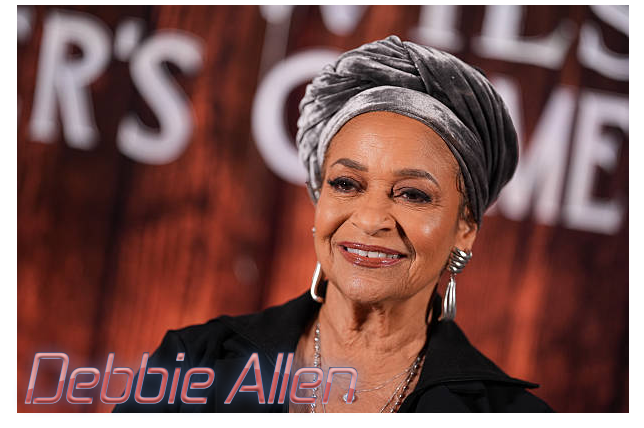
Deborah Kaye Allen, born January 16, 1950, grew up in that same extraordinary household, where artistic expression was encouraged and limitations were meant to be challenged. She certainly knew what it meant to have a talented older sister, but Debbie had ambitions that reached well beyond following anyone else’s footsteps. The craft mattered. So did the opportunity to create something nobody had seen before. Flip on the 1982 television series “Fame” and there stood Lydia Grant, that demanding dance teacher promising students their big dreams would be paid for in sweat. That part turned the younger sister into a household name, though acting was merely the front door. Behind it sprawled a mansion of ambition.
Choreography became one of her greatest calling cards, arriving like a tide nobody could hold back. Seven Academy Awards ceremonies carried her fingerprints across their elaborate production numbers. Then came directing, producing, and the responsibility of shaping stories that mattered. Anybody who loved “A Different World” owes something to the woman who helped steer that series toward serious conversations about colorism, class, relationships, and what young, gifted Black students actually faced at an HBCU. Under her creative leadership, the show became something bigger than a college comedy. It offered viewers a window into Black intellectual life, cultural pride, and the possibilities that higher education could open.
Both women, by the way, earned degrees from Howard University, Phylicia in 1970 and Debbie in 1971. The same proud institution helped sharpen gifts their mother had nurtured long before either daughter arrived on campus. College did not create these two extraordinary women. Their education strengthened what Mama had already planted. And neither sister ever needed to diminish the other’s accomplishments to prove her own worth.
Beyond the credits sat the work that outlives it all. In 2001, Debbie Allen opened the Debbie Allen Dance Academy in Los Angeles, a training ground committed to making serious dance education accessible to young people from different backgrounds, including children from communities that have historically faced barriers to professional training. Thousands of young dancers have moved through those doors over the years. Plenty showed up with little more than determination and walked away with discipline, confidence, and a clearer understanding of what hard work could accomplish. Every winter, the academy stages its “Hot Chocolate Nutcracker,” a sprawling, joyful reimagining of the holiday classic that pours different cultures into a familiar story and makes the whole thing feel brand new.
Notice what never became the foundation of this remarkable career. Debbie Allen did not build her reputation by leaning on the words “Phylicia Rashad’s sister.” Her talent, work ethic, and determination gave her an identity that audiences could recognize without any family introduction. The two women developed careers that sometimes overlapped, but they never needed to turn their individual accomplishments into a competition. Their professional lives have included collaborations, public celebrations of each other’s work, and a sisterhood rooted in the artistic upbringing they shared. When Phylicia returned to Howard as dean, Debbie spoke warmly about her sister’s commitment to serving the university. That is the kind of love that understands another person’s success takes nothing away from your own.
Even Mattel recognized the importance of Debbie’s contribution to American entertainment. In 2025, the company introduced a Barbie doll modeled on her iconic “Fame” years, honoring her through its Tribute Collection. Think about what that means for a little Black girl holding that doll. She is not simply looking at another beautiful toy dressed for a performance. She is holding a reminder that a child from Houston grew up to become a dancer, actress, director, producer, choreographer, educator, and cultural institution. Representation matters most when it introduces young people to possibilities they might never have considered for themselves.
Eventually Hollywood figured out what the rest of us already knew. The trophies piled up over the years. Five Emmy Awards. A Golden Globe. A star on the Hollywood Walk of Fame. Recognition as part of the 2020 Kennedy Center Honors class, with the ceremony held in 2021 because of the pandemic. Then came November 16, 2025, the night Cynthia Erivo presented Debbie Allen with an Honorary Oscar at the Governors Awards. At 75, with that golden statue finally in her hands, Debbie joked that receiving Oscar felt almost like getting married, offering a playful apology to her longtime husband, Norm Nixon. The moment celebrated decades of artistic achievement, but it also honored a Black woman who had spent much of her life opening doors for other performers. Hollywood has not always been generous about recognizing the women who build its institutions, which made that recognition especially meaningful.
So what is this remarkable soul doing right now, here in the fall of 2026?
Plenty. This past spring, after eighteen years away from directing on Broadway, Debbie answered a call from Denzel Washington and agreed to direct a revival of August Wilson’s “Joe Turner’s Come and Gone.” The production officially opened April 25 and completed its limited run July 26, earning five Tony Award nominations along the way. Featuring performers including Taraji P. Henson, Cedric the Entertainer, and Ruben Santiago-Hudson, the revival introduced Wilson’s powerful storytelling to another generation of theatergoers. And the story is not finished. A film adaptation is also in development, with Santiago-Hudson working on the screenplay as part of Washington’s larger commitment to bringing August Wilson’s work to the screen. At 76, Debbie Allen is still accepting creative challenges that would intimidate artists half her age.
Television refuses to let go either. Viewers of “Grey’s Anatomy” know her as the formidable Catherine Fox, while behind the scenes she continues contributing to the series as an executive producer and director. And here sits the news that has had Sistas celebrating this fall. Netflix brought “A Different World” back on September 24, 2026, introducing a new generation of students at the fictional Hillman College. Debbie returned as an executive producer and directed the premiere episode, helping connect the spirit of the original series with a younger audience. The sequel follows Deborah Wayne, the daughter of Dwayne Wayne and Whitley Gilbert, bringing familiar family history into a new era of Black college life. The response was strong enough that Netflix announced a second season on October 2, just days after the premiere. For a woman who helped shape the original series decades ago, returning to Hillman and watching another generation embrace its message must represent a remarkable full-circle moment.
Here is the lesson for the rest of us. Two Black women came out of the same living room, breathed the same poetry, and flat refused to fight over one crown. Phylicia built a remarkable career on the stage and screen, eventually taking her talents into arts education and university leadership. Debbie embraced acting, choreography, directing, producing, and teaching, building a creative kingdom that answers to no name but her own. Neither woman needed to become a smaller version of her sister to succeed. They understood something that too many people spend a lifetime trying to learn. Somebody else’s accomplishments do not place a ceiling over your possibilities, and family love should never require you to surrender your own ambitions.
Most of us measure success by how brightly a light shines down on us. Debbie Allen has spent much of her life measuring it by how many lights she can turn on for somebody else. Watch any recital at that academy, any performer coached into believing in herself, or any newcomer given a chance to develop a gift, and the empire shows itself plainly. Her accomplishments extend far beyond the characters she has portrayed or the television episodes she has directed. She has helped build a foundation that younger artists can stand on long after the applause fades. None of it depended on standing beside a famous relative. All of it came from creating something so substantial that being somebody’s little sister became just one small detail in a much larger life.
Mama Vivian raised those girls right. And although she is no longer here to watch their next chapters unfold, the lessons she planted continue to live through both daughters. Phylicia Rashad and Debbie Allen turned a Houston childhood into permanent contributions to American art, and neither ever needed the other’s glow to burn bright. One sister’s greatness never diminished the other’s possibilities. Instead, they gave generations of Black women two powerful examples of what talent, education, determination, and family support can produce. Debbie Allen may always be Phylicia Rashad’s little sister, but she is also an Oscar honoree, an accomplished director, a respected choreographer, and the founder of a dance academy carrying her vision into the future. Her legacy rests on the work she accomplished, not simply on having a famous sister. That, right there, is the quiet brilliance of Debbie Allen.
Staff Writer; Raven Jones
Raven writes about music, relationships, and the everyday ups and downs of Black women… She keeps it honest, encourages other sistas, and can be reached at RavenJ@ThySistas.com.