
(ThySistas.com) Taraji P. Henson has spent decades proving herself in Hollywood. These days, the actress seems more interested in discovering what else she can accomplish. That confidence isn’t the airbrushed version magazines keep trying to sell the rest of us, but the lived-in kind that settles on a woman who finally quit asking anybody’s permission. Back in September, she turned another page, landing at a number our culture treats as a slammed door for Black women who look like us.
Somewhere along the way, a lie got planted deep in the soil. The one whispering that a Black woman’s best shot comes early, that real opportunity carries an expiration date stamped right around forty. Taraji never got that memo. Or maybe the D.C. native read it, laughed out loud, then tossed the thing straight in the garbage.
Consider what just unfolded on a Broadway stage. This past spring, the Golden Globe winner made her acting debut on the Great White Way in August Wilson’s “Joe Turner’s Come and Gone,” slipping into the character of Bertha Holly beside Cedric the Entertainer. Debbie Allen sat in the director’s chair. The production opened at the Barrymore on April 25, enjoying a successful limited engagement before closing on July 26. Nearly three decades into a screen career, this performer stepped onto theater’s toughest platform for the very first time.
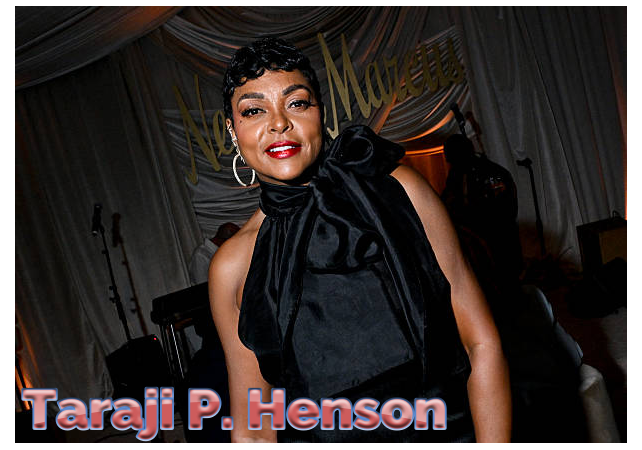
Think about the nerve such a move demands. Plenty of folks that far along coast on reputation, booking comfortable gigs asking almost nothing of them. Not our girl. In June, Sardi’s unveiled her portrait, adding Taraji to the famous Manhattan restaurant’s walls of Broadway caricatures. Recognition like that does not fall in your lap. You earn it by wagering on yourself when the smart money says sit down and be quiet.
None of this showed up by accident, though. Long before Cookie Lyon made Taraji a household name on “Empire,” the young talent from Southeast Washington earned a theater degree at Howard University. Those early years brought financial struggles and the responsibilities of raising a young son. That training held firm. Decades later, the same discipline surfaces in everything the Howard graduate puts a hand to.
Once her Broadway run wrapped in July, Taraji had more than one project in motion. October saw Deadline report Amazon developing a drama titled “Whiskey Matriarch” around the Oscar nominee. A two-film pact with Netflix, announced in 2025, also remains in motion through TPH Entertainment. The production company gives Taraji greater creative control over the projects developed under its banner. She also helped produce the Darlene Love documentary “Darlene Love: I Know Where I’ve Been.” The film won the People’s Choice Documentary Award at the Toronto International Film Festival in September. Retirement certainly does not appear to be on her calendar.
Beyond the cameras, the Howard alum pours energy into the Boris Lawrence Henson Foundation. Established in honor of her late father, the organization works to expand access to mental health care in Black communities. Purpose like that does not shrink with age. If anything, the mission sharpens once a person stops chasing approval, choosing instead to pour into something larger than any single credit on a résumé.
Here sits the reason all of this matters to the Sistas reading right now. Watching a woman who could be an auntie, a mentor, or even the face in the mirror step boldly into unfamiliar territory does something real to the spirit. That courage hits differently when the world insists a woman’s best years are behind her. It flips the whole script. Middle age stops registering as a slow slide toward being forgotten. Instead the season opens up like a runway with the lights just coming up.
Starting over after fifty is no consolation prize, either. For seasoned Black women especially, that fresh chapter can become the main event. By this stage, experience has taught a woman what deserves her energy and what does not. Taraji already has an Oscar nomination, a Golden Globe, memorable roles in “Hidden Figures” and “The Color Purple,” plus a best-selling memoir. Her mental health advocacy adds another dimension. Yet the richest material seems to keep landing now, well past the window Hollywood loves to shut on women of a certain vintage.
That stubbornness carries weight beyond one bright career. When a figure this visible refuses the script handed to aging Black women, the refusal ripples outward. Suddenly, a sistah who spent thirty years singing in the church choir starts thinking about recording a song of her own. Another pulls an unfinished novel from a dresser drawer and gets back to writing. Representation does that. Seeing it done, right out in the open, loosens something that fear kept locked.
Of course, none of the glittering parts tell the full truth. Taraji has spoken candidly about Hollywood’s double standards. She has watched male colleagues land franchise paydays while equally gifted women fought for scraps. Even now, the frustration remains real. Speaking openly about those struggles matters as much as any trophy. It reminds us that the road to success was never easy.
Still, the throughline holds. A girl from Washington who kept choosing the harder, braver path now stands as living proof that the back half of a life can shine brighter than the front. Not in spite of the years, but because of them. The disappointments, slammed doors, and professional setbacks helped shape an artist nobody could have predicted at twenty-five.
That is the real gift tucked inside this story. Beginning again was never reserved for the young, whatever the culture keeps insisting. Grown Sistas carry a particular kind of power, forged through raising families, chasing dreams, and surviving life’s hardest moments. This chapter is far from an ending. For a whole lot of us watching from the cheap seats, it might just be the overdue beginning.
Hollywood can keep its tired ideas about when a woman’s best years should end. Taraji is still taking on new challenges and telling stories on her own terms. The final curtain is nowhere in sight.
Staff Writer; Raven Jones
Raven writes about music, relationships, and the everyday ups and downs of Black women… She keeps it honest, encourages other sistas, and can be reached at RavenJ@ThySistas.com.