
(ThySistas.com) Prestige period television has spent the better part of a century perfecting a single, seductive fantasy of wealth and refinement. Sweeping staircases. Corsets laced within an inch of a fainting spell. String quartets, tea poured into china too delicate to breathe near. Beautiful, sure. Familiar too, after the hundredth rerun on a lazy Sunday. Yet women who favored my mother and the aunties who helped raise me rarely appeared in those stories. Black women seldom made it past the kitchen door, if the camera bothered with them at all.
Then came Peggy Scott.
Denée Benton walked into HBO’s The Gilded Age back in 2022 and quietly rearranged the furniture of an entire genre. Peggy showed up in that very first episode, neither maid nor wallpaper, but a young writer with ink on her fingers and ambition in her chest. A graduate of the Institute for Colored Youth. Secretary to the formidable Agnes van Rhijn, though never shrunk down by the title. Her father, Arthur Scott, was a wealthy Brooklyn pharmacist. Her mother, Dorothy, was a classically trained pianist, brought to life by the great Audra McDonald.
Sit with what that household meant on screen. Black money. Refinement to spare. Folks with a parlor, firm opinions, a family name that carried weight in their circles. Period television had rarely handed us that, so Benton grasped the responsibility of carrying it with grace.
Something else deserves saying about the casting of that family. Pairing a powerhouse like McDonald as the mother with Benton as the daughter gave the series a lineage you could feel. Two women from different generations, protecting one another, clashing, loving hard. That bond between mother and daughter read true to anybody raised by a strong matriarch who wanted more for a child than the world intended to give.
By the third season, which premiered in June of 2025, the drama finally let the Scotts and their world stretch all the way out. Newport. The Black elite summering among the mansions, gliding through rooms of inherited fortune with codes of their own. Writers leaned into colorism too, a subject our community has turned over at kitchen tables for generations. Friends of mine texted through those Newport episodes, fascinated yet stung, because that particular wound still throbs. Phylicia Rashad swept in as Mrs. Kirkland, gatekeeper of that rarefied society, the reigning Mrs. Astor of that set. Brian Stokes Mitchell played the husband. Between them, the pair turned the screws on a courtship that genuinely mattered.
That spark belonged to Peggy and Dr. William Kirkland, played with easy charm by Jordan Donica. The good doctor treated our heroine through a frightening bout of pneumonia, and tenderness grew from there. Watching two accomplished Black characters circle each other with wit, hesitation, grown folks chemistry, felt like a blessing. Giggling replaced grief for a spell. Being adored for her mind first, looks second, anchored the romance, a quality Donica himself named as the thing that pulled him in.
Marriage has threaded through this storyline in more ways than one. Longtime viewers recall the quiet ache of an earlier union, to a young man named Elias Finn, a marriage her father pushed a judge to void. Arthur secretly arranged for their son to be adopted and told Peggy the baby had died at birth. Only later did she learn the awful truth. The boy had survived, but had since died of scarlet fever. So when the season three finale brought Dr. Kirkland to one knee, the proposal landed heavy. Peggy said yes. Benton has shared that she and historical consultant Dr. Erica Armstrong Dunbar dreamed of staging a grand Black society ball as far back as 2019. Years later, the show finally gave Peggy a scene worthy of all that longing, elegance, and hard-won joy.
Here is why the whole thing hits different for women like me. Those glossy period pieces sold a fantasy of elegance that quietly informed Black women that the picture held no space for us, outside of labor. Benton flipped that script without once raising a fuss about it. Peggy’s intelligence startles nobody in the room. The bloodline reads as no sob story. This character simply stands as proof that Black women have forever been educated, ambitious, romantic, worthy of the swelling orchestra when love finally walks through the door. Generations of us learned to adore these lavish worlds from the outside, noses pressed to the glass. Peggy stepped clean through the pane.
The ripple reaches well past the television set. Little brown girls get to watch a journalist who favors them chase a byline through 1880s New York. Grown women catch a glimpse of their own grandmothers’ dignity. Sistas who treasure a good costume drama no longer squint past the margins hunting for themselves. Representation doing its real work looks exactly like this, not a checkbox, more a mirror held up with intention.
Benton’s career has remained busy beyond the television screen. This fall, the Tony nominee joined Patina Miller in the Broadway premiere of School Girls; Or, The African Mean Girls Play, directed by Whitney White. The production took its final bow on November 15 after a two-week extension. Benton played Paulina, the boarding school queen bee with her eyes on a Miss Ghana crown. Carnegie Mellon helped hone her talents, and theater remains a first love. Her performance in Natasha, Pierre & The Great Comet of 1812 earned a Tony nomination. She also played Eliza in Hamilton.
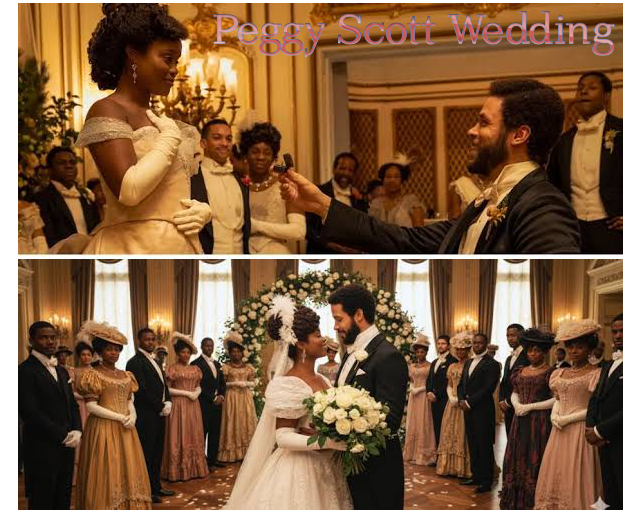
Now for the sweet part. Season four of the HBO drama premiered on November 1, bringing Peggy a newly published book, wedding plans, and a future mother-in-law who still guards plenty of opinions. Then came the November 15 episode, and our heroine finally married Dr. Kirkland in Newport. The Fisk Jubilee Singers brought their voices to the ceremony, while Peggy and William jumped the broom, honoring the very traditions Mrs. Kirkland had hoped to shut out. Benton fought to make sure the wedding unfolded on screen rather than somewhere between episodes, and that decision gave Black viewers a moment worth savoring. Fans have taken to social media asking for a spinoff centered on the Scott family, though HBO has announced no such series. In real life, Benton is married to performer Carl Lundstedt and keeps building a career that refuses tidy boxes. Stage, screen, independent film, the actress moves among them like a musician who knows precisely which instrument the moment requires.
What this gifted artist has pulled off, through one richly drawn woman, travels far beyond ordinary entertainment. Black women earned a seat at the grand table of the period drama long before 2022 ever rolled around. Peggy Scott pulled out the chair, sat down, called for the good china, dared the genre to object. Those gowns were always gorgeous. The story stitched underneath them, at long last, belongs to all of us.
Staff Writer: Brenda Poole
BP writes about entertainment, relationships, faith, and life in general… She enjoys speaking on things Black women can relate to and hopefully giving a sista something useful along the way…
Feel free to email her at BrendaP@ThySistas.com.