(ThySistas.com) With its fourth season already underway, HBO’s The Gilded Age continues delivering its signature lavish drama. Behind part of that spectacle stands a seasoned performer whose greatest creative power now lives behind the camera. That performer answers to Salli Richardson-Whitfield. Plenty of us came up watching the actress glow in A Low Down Dirty Shame or stayed glued to the cult sci-fi favorite Eureka. Little did we know that an extraordinary second act was waiting behind that familiar face.
Here sits the detail that should make Sistas straighten in their seats. The boldest leap of this Chicago native’s working life did not surface in youth, back when the business worships fresh faces. It touched down squarely in middle age, long after Tinseltown had quietly chosen which tidy box suited her.
Born November 23, 1967, the Chicago kid logged more than three decades on screen. Twenty-plus feature films. Steady television gigs. Scenes shared with some of the biggest names in the trade. Solid by any measure, though also painfully ordinary for Black women who watch the meaty roles vanish the instant a birthday tally climbs.
Then arrived the nudge that redrew the whole map. While starring in Ava DuVernay’s 2010 indie I Will Follow, Richardson-Whitfield caught the filmmaker voicing what nobody before had dared: the instincts for directing already lived inside her. That encouragement led the actress to study the craft more seriously, eventually directing episodes of Eureka and Stitchers. DuVernay later provided another opportunity, bringing her aboard Queen Sugar for two consecutive episodes during its debut season in 2016. One vote of faith from another sister in the game helped pry loose a door somebody had painted shut.
What came next, across the late 2010s and into the early 2020s, proved relentless. Chicago Med, Luke Cage, Underground, Altered Carbon, The Wheel of Time. Her directing credits quickly multiplied while the phone kept buzzing. Executives who once clocked merely a striking lead found themselves studying a filmmaker assembling entire episodes with quiet command. Networks that formerly offered only guest spots began handing over tentpole hours.
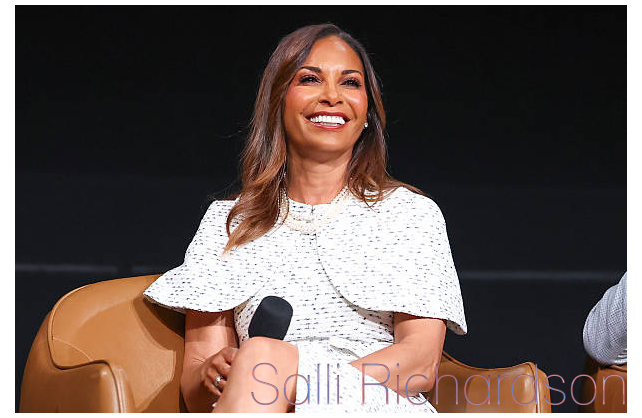
By September 2020, that track record had earned an overall deal with HBO, the kind of pact that signals the business views you as a builder of shows instead of a hired hand. On Julian Fellowes’ sumptuous period piece The Gilded Age, the Chicago native directed four of the opening season’s nine episodes and became an executive producer. Inside that gilded world, the creative team confronted something the gowns could never cover. As actress Denée Benton later recalled, Richardson-Whitfield, historical consultant Erica Armstrong Dunbar, and Benton were initially the only Black people connected to the production. Representation stood as no abstraction. The whole count fit on a single hand.
That same era handed the storyteller a grittier stage. Adam McKay’s Winning Time: The Rise of the Lakers Dynasty leaned on Richardson-Whitfield for its most electric passages, among them the closing pair of episodes of season one. The director returned for the second season, including the hour titled “Beat L.A.” The Television Academy paid attention. In 2024, that episode made this Chicago-raised artist the first Black woman ever to earn an Emmy nomination for Outstanding Directing for a Drama Series, a category that had long shut sisters out.
Most would read that milestone as the summit, a career-capping flourish to admire from below. For Salli, that moment felt more like base camp, marking the beginning of an even steeper climb.
The real fireworks arrived with the 2026 Emmy nominations. Dual directing nods across two separate drama series, one ceremony. One recognized her work on The Gilded Age episode “My Mind Is Made Up.” The other honored “Out Beyond Ideas of Wrongdoing and Rightdoing, There Is a River” from HBO’s gritty crime drama Task, starring Mark Ruffalo. No woman before her had earned directing nominations for two different drama series in the same year. A third nomination came through her executive producer role on The Gilded Age. The milestone carried extra weight too, surfacing in a year when Emmy acting and hosting nominations for performers of color sank to an eleven-year low. One determined sister from Chicago rewrote the record books while the broader awards picture showed how much work remained.
Let us consider what Salli’s journey means for the rest of us. The lesson reaches well beyond one résumé. Hollywood loves to stamp an expiration date on women, pressing down even harder on Black women. Fifty shows up, plum roles dry out, and invitations grow scarce. Soon comes the assumption that your richest chapters already sit behind you.
Our culture also loves a tidy story about staying in your lane. Salli torched that script. The body of work destined to outlast every on-camera credit got rolling well after a point when plenty of folks hear the word coast. Grown, experienced, and clear-eyed about a trade that rarely rolls out welcome mats for faces like hers, the veteran refused to wait on anybody’s permission. Without a college degree or formal film school training, Richardson-Whitfield built an education through years of experience on other people’s sets. Studying the craft firsthand, she absorbed the pulse of production, then claimed the chair at the head of the table. Ambition carried no curfew.
So what fills the present calendar for this powerhouse? Plenty. Richardson-Whitfield continues building her career behind the camera, supported by an HBO partnership extended for another two years in 2025. Directing remains central to that work, but the executive producer’s chair offers greater influence over how stories take shape. After decades of bringing other people’s scripts to life, she now has a stronger creative voice. Hollywood is no longer simply deciding where Salli fits. The veteran is helping shape the stories audiences get to see.
Away from the soundstage, the home front stays steady. Married to actor Dondré T. Whitfield since 2002, this mother of two has built a life that flatly refuses to pit ambition against family. The couple has weathered more than twenty years together, raising kids while a pair of demanding careers ran in parallel. Amid growing professional demands, home has remained a priority.
A special kind of medicine comes from watching a grown sister bloom exactly when the world expects the opposite. Young talent hogs most of the oxygen in this business, so a seasoned artist gathering historic honors for brand-new output reshapes the whole picture of what stays possible. The message to Sistas considering career changes, second acts, or dreams set aside for decades rings plain: that clock belongs to you alone.
None of this reinvention happened by accident. The pivot behind the lens was deliberate and patient, built on years of quiet study while the spotlight pointed elsewhere. Black women reading along already hold that same gift for remaking themselves, frequently without any stage to prove it on. Permission was never the true requirement. The decision always was.
A birthday arrives this very month for the trailblazer, with fifty-nine candles waiting on November 23. Yet the most gripping chapters still read “in progress.” That, right there, holds the entire point.
Staff Writer; Raven Jones
Raven writes about music, relationships, and the everyday ups and downs of Black women… She keeps it honest, encourages other sistas, and can be reached at RavenJ@ThySistas.com.