
(ThySistas.com) There is a certain look a woman gives you when she thinks she has figured out your whole interior life from the outside of your head. I have caught it in break rooms, in the produce aisle, across the pew on Sunday morning. Her eyes travel to the lace laid flat against my forehead, to the length that was not present last month, and something behind them goes quiet with judgment. The verdict lands fast. That Sista does not love herself, the thinking goes. Poor thing is running from her roots. Deep down she wishes she looked like somebody God did not make her.
I want to sit with that assumption a while, because it has trailed us Sistas for generations and it deserves a real answer instead of a defensive one.
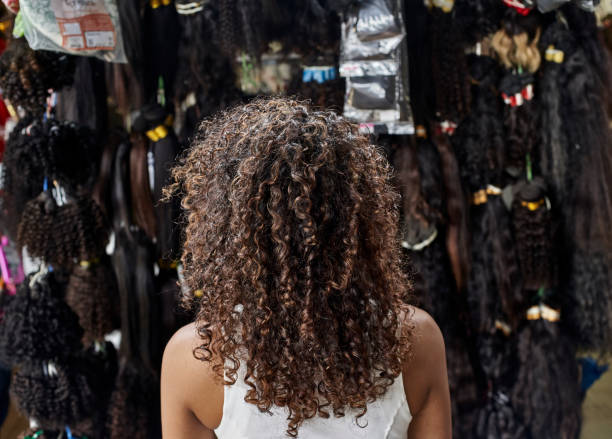
Here is how the accusation usually runs. A Black woman covers her natural hair, so she must be ashamed of it. She spends four hours in the chair getting a weave sewn to her scalp, so plainly she wishes she looked European and has turned her back on the coils God handed her. People float this gently, tucked inside pretty words about pride and consciousness. Peel those words back and it is the same tired reflex, one more set of hands reaching to manage what sits on our own bodies, and I quit being polite about it a long time ago.
Start with the past, because nothing about our bond with what grows from our heads happened in a vacuum. During the slave trade and slavery, many Africans had their hair traditions disrupted, while enslaved women often covered their heads for labor, protection, or because of rules imposed upon them. In colonial Louisiana, authorities even required women of color to wear tignons. Those controls stripped away styles that had once told the world their nation, their age, their marital standing, their wealth, and their place within the community. What we grew was called wild, unkempt, wrong. So the Sistas who came after learned to move through a country that had already decided our texture was a problem before we opened our mouths. Every choice made since then carries that weight, whether we cover up or wear it out. Faulting a woman for one option while praising her for the other ignores that both roads run through the same painful ground.
Now walk into any shop on a Saturday and watch how it actually plays out. A teacher sits down worn out after a week of thirty children and asks for something low fuss so her mornings belong to her again. A nurse pulling doubles wants a properly installed protective style so her real strands can rest from the friction of daily combing and heat. Somebody fresh out of chemo, whose scalp went bare through no fault of her own, finds a piece that lets her recognize the person in the mirror again. A widow on a fixed income wants one good unit that saves the cost of weekly salon trips. Where, in any of that, is the self loathing? I see resourcefulness. I see Sistas managing full lives with the tools within reach.
The medical angle alone should end the argument. Alopecia does not care about your politics. Neither does the thinning that arrives with age, with stress, with the hormones that shift as we cross into our fifties. A lace front is not vanity for the one covering a bare edge. It is dignity. To look at her and whisper that she despises herself is not consciousness. It is cruelty wearing a righteous mask.
Then comes the plain matter of freedom. I can wake wanting a short honey colored bob and go to bed dreaming of waist length curls, and a good install lets me be two different women inside a single week without touching a relaxer or a hot comb. That is not fleeing anything. That is play. That is artistry. My grandmother pressed her edges over the stove and my niece orders lace online, and both of them are doing one identical thing across the years, which is deciding for themselves how they want to show up in the world.
People forget how much of this comes down to survival in rooms we did not build. There are still offices where our natural hair gets read as sloppy, where a locked crown or a puff invites a remark about looking polished. That bias is not some grievance we cooked up. Lawmakers pushed the CROWN Act through state by state because the same discrimination kept surfacing in hiring rooms and school hallways. So a Sista who pins a sleek unit down before a job interview is not sitting in that chair hating her own coils. It is a calculated move in a game somebody else rigged, guarding a hard earned paycheck while the culture slowly drags those buildings toward fairness.
What troubles me most is when the accusation comes from inside the house. Somewhere along the way, parts of the natural movement I love hardened into a ranking system, a means for some of us to measure who is truly enlightened by how little help our style requires. Wash and go at the summit, a full weave near the bottom, everybody else scrambling to prove their consciousness by their part line. I understand where it came from. After decades of being told our texture was ugly, claiming it loudly felt like release. But that release curdles the moment it becomes one more rule about what a worthy Sista is allowed to put on her head.
Loving your natural coils and enjoying a fresh sew in are not enemies. I have deep conditioned my own strands on a quiet Sunday and installed a unit that following Wednesday, and my regard for the hair growing out of my scalp never wavered once. The two live together easily in the same person, because the covering was never a rejection. Some seasons it meant wanting a change, other times it was just a mood, and more than once it was nothing deeper than a plain Tuesday when I did not feel like fighting my kitchen.
The real mix up, I think, is deciding that being your true self has to mean going without. No one tells a woman to wipe off her lipstick to prove she is at peace with her face. Nobody reaches over and pulls the hoops from her ears to test how she feels about them. She gets to color it, pin it, add to it, and change her mind by Friday, and we file all of that under personal style. Somehow the top of the head is the single spot where a small bit of enhancement gets read like a confession under oath. A choice turns into a diagnosis. That says far more about the eyes doing the judging than the one they think they have pegged.
None of this means every choice floats free of the wider world. Of course some Sistas carry wounds about our texture that were planted early and deep, and healing those is genuine work worth doing. But you cannot diagnose that wound from across a room. Since when did not rocking your real hair around the clock become anybody else’s business to referee? Nobody drags a man who grows a beard in winter and shaves it clean come spring, so I fail to see why our heads invite a running commentary his chin escapes entirely. The only honest response to somebody you do not know is respect, not a verdict.
Resist the whole story your mind wants to build the next time you notice fresh length that was not present before, or catch the shine of synthetic curls under the sanctuary lights. Perhaps she is shielding fragile edges. There could be loss underneath that lace. Or the swing of it simply makes her grin in the mirror. Whether the covering is shame or a busy morning met with something quick, that interior belongs to her, and a covered head has never been a confession.
So let me hand it over to you, because I have had my say. What is the truth you carry about weaves and wigs, the one you might not speak on out loud? When a Sister walks in laid from ear to ear, does your spirit say good for her, or does some old voice you did not choose to plant start whispering that going bare would have been the braver thing? Sit with that first little flicker, and let it tell on you louder than anything resting on the crown of a Sister busy minding her own gorgeous business.
Staff Writer; Raven Jones
Raven writes about music, relationships, and the everyday ups and downs of Black women… She keeps it honest, encourages other sistas, and can be reached at RavenJ@ThySistas.com.