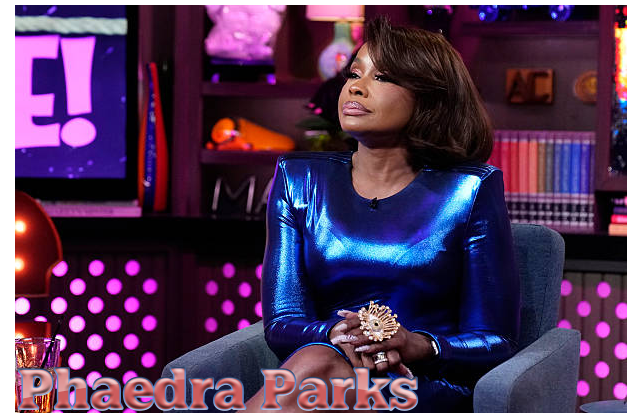
(ThySistas.com) Phaedra Parks has a law degree from the University of Georgia, a successful legal career, and the kind of professional credentials many women work a lifetime to achieve. Book smart to the bone, she earned the diploma, passed the bar, and established herself in Atlanta long before reality television made her a household name. And yet there Miss Parks sits, year after year, mixed up in cast trips gone wrong, whispered accusations, and confessional interviews stitched together to make grown folks look silly.
So the question sits heavy for those of us watching from our couches with a glass of wine. How does somebody this sharp keep signing up for foolishness?
Understand me clearly. I am not out here to drag a sister for chasing a bag. Too many Black women got told to sit down and stay grateful for scraps that were never enough to begin with. So when one of us turns her name into income, a stubborn part of me stands up and cheers. Reality television can open doors to appearance fees, brand partnerships, speaking engagements, and business opportunities that might never come along otherwise. A familiar face becomes a marketable name, and the right opportunity can turn a season of television into years of additional income. The financial possibilities are difficult to ignore.
Still, something nags.
Here is what separates our girl from the average castmate. Phaedra had an established professional career before the cameras came calling. This one has credentials that are no joke: a law degree, a legal practice that has represented clients such as Bobby Brown, a term running the Gate City Bar Association, and professional experience extending well beyond the entertainment industry. Add her education in mortuary science on top, and the woman has more than one career path available to her. When your resume looks like that, the math around selling your image changes. You are not necessarily choosing between the cameras and financial survival. You are choosing between a quieter professional life and a louder, messier kind of fame.
That choice is where the tension lives.
Reputation is a funny currency for professional Black women. It takes decades to build and about ten seconds of edited footage to dent. Our foremothers understood this in their bones. They dressed a certain way, spoke a certain way, and carried themselves like the whole race was watching, because in many rooms it was. Some of that was survival, some of it was respectability politics we have rightly begun to question. Yet underneath the old rules sat a truth that has not expired. When you are one of few in your field, every move you make can get read as evidence about the rest.
So when a lawyer becomes better known for a birthday trip to Scotland that dissolved into chaos than for her actual work before a judge, a bill comes due. Maybe not to her bank account. To the image. To the young law student who googles her and finds reality television clips competing with the accomplishments that built her professional career.
Now, the other side deserves a fair hearing, because smart people make it. Some say the strategy is a longer game than her critics realize. Visibility, they argue, can feed a legal practice and create additional business opportunities. A face people recognize can attract clients, command appearance fees, and open doors a quiet attorney might never see. The theatrics, in this telling, are not a betrayal of the diploma. They are a marketing budget nobody billed her for. There is even something subversive about Black women using a genre that has often portrayed them through conflict, then turning that exposure into financial opportunities of their own.
I hear all that. I even believe some of it.
What I keep circling back to, though, is the difference between using a platform and being used by one. The camera does not love us equally. Producers understand that disagreements, confrontations, and emotional outbursts can keep viewers talking long after an episode ends. Every genre seems to have a role reserved for the loud, sassy Sista, and reality television has made plenty of money keeping that image in circulation. The paycheck is real. So is the box it can quietly build around you.
There is also the matter of what the mess teaches the girls coming up behind us. When an accomplished woman becomes better known for her television confrontations than her professional achievements, we risk sending the message that conflict draws more attention than brilliance. Sistas already battle an assumption that we are combustible, quick tempered, and ready to swing. A hit franchise repeatedly packaging that picture, particularly around a woman whose accomplishments offer another story worth telling, does not help challenge those stereotypes one bit.
Which brings us to where the Peach State’s own stands right now, in the fall of 2026. The lady is nowhere near slowing down. This past summer brought another full season of The Real Housewives of Atlanta, complete with a birthday trip to Scotland that gave viewers plenty to discuss. She even appeared alongside familiar faces during the Atlanta stop of The Real Housewives Ultimate Girls Trip: Roaring 20th. Come October, she turns 53, with a legal background, a reality television career, and a public profile that keeps her name in circulation. By every visible measure, our Athens native remains comfortable living in both worlds.
And you know what? Maybe that is her right. Grown and educated, she has spent enough years in the entertainment industry to understand the business better than most of us watching from home. The version of dignity I keep reaching for might be nothing more than my own comfort dressed up as principle. A woman who survived a public divorce, raised two sons while living in the public eye, and maintained a professional identity beyond reality television may have made her peace with the bargain a long time ago.
But I will say this to my Sistas watching along with me. Ask yourself what you would do holding her hand of cards. The degrees, the professional credentials, the name everybody knows, and an offer to get paid handsomely for arguing on TV. It is easy to judge from the cheap seats. It is harder to admit that some of us, handed that same envelope, might sign too.
Phaedra Parks has spent enough time in front of the cameras to know that reality television comes with rewards and consequences. Whether she considers the trade worthwhile is something only she can answer. The rest of us are left to decide whether the price was worth it, and whether the applause we give and the eyes we roll are really about her at all, or about the choices we quietly wish we were bold enough to make ourselves.
Staff Writer; Raven Jones
Raven writes about music, relationships, and the everyday ups and downs of Black women… She keeps it honest, encourages other sistas, and can be reached at RavenJ@ThySistas.com.