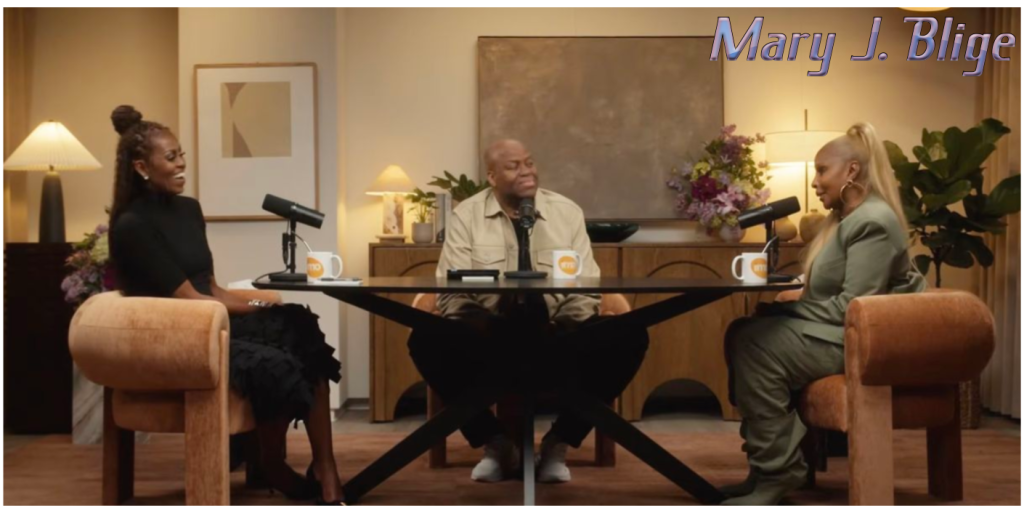
(ThySistas.com) Mary J. Blige has spent her whole career putting private pain on record. On the August 19 episode of Michelle Obama and Craig Robinson’s podcast, she added a personal chapter to the pile and told the hosts why she chose not to have kids. The answer had nothing to do with bitterness. She worked it out young, watched it unfold in her own family, and trusted what her eyes told her.
She watched relatives struggle to find babysitters and live with little choice or freedom. Seeing that burden while she was young helped shape her decision not to have children.
That vow is where the real conversation begins. The question worth sitting with is not whether raising a family is noble or foolish. It is why our culture keeps handing Black women a script that demands everything and returns almost nothing.
Consider what the singer raised in Yonkers actually witnessed. Her own mother had a scholarship for singing but could not pursue that dream because she had children young and needed to care for them. That gift stayed shut. The singing went into the household instead, and the daughter who grew up hearing it took what her mama never got to use and built a career on it. Pride runs all through that story. So does grief, and Blige does not pretend otherwise.
Too many of our Sistas know that toll without a famous surname attached. They know the aunt who raised five while working doubles. Some recall the neighbor whose dreams got shelved the day a first test came back positive. Black women across every zip code have watched the maternal role arrive with a mountain of duty and a thimble of backup, and they have learned to grin through the exhaustion because complaint gets read as ingratitude.
The singer refused that particular performance. “I saw a lot of people struggling,” she told her hosts, pointing to relatives who needed sitters and rarely experienced freedom. Independence became her north star. She built a career and helped launch the Strength of a Woman Festival and Summit, all of it on her own terms.
Age has complicated things for her, and she owns that. Mary now sees how valuable her relatives’ teenagers and other children are to them. The lonely part she did not hide. Sometimes I’m lonely, she told the hosts, though I’m alone plenty, and she talked about the movies she puts on and the clothes she tries on to pass a slow evening at home. She sounds settled about the road she took. The ache still turns up now and then, and she says as much without flinching.
Michelle Obama did not soften it either. Nobody has to be a mother, the former first lady said, and becoming one will not make a person complete. Her warning was aimed at anybody expecting a child to patch what is already broken in them. That baby just ends up carrying the parent’s emptiness, she said, and nobody comes out fixed. The wholeness has to be there first.
That truth lands hard in communities where a woman’s worth still gets measured by her fertility. Grandmothers ask about grandbabies before they ask about happiness. Church aunties start clucking when a wedding goes a year with no baby news. It all comes wrapped in love, which is exactly what makes it so hard to name as pressure. And it sits heaviest on Sistas who are already stretched way past thin.
This is the part people keep missing. Skipping motherhood did not turn her cold toward the young. She has poured love into her nieces and nephews and even wrote the children’s book Mary Can! to encourage young people to believe in their possibilities. You do not need a birth certificate to prove you can love somebody. When we act like there is only one true kind of nurture, plenty of Black women pay for it with years of guilt they never earned.
Look closer at the arithmetic our society runs. It celebrates motherhood in speeches and abandons mothers in policy. Black women feel that abandonment sharpest, since they often face some of the deepest gaps and thinnest safety nets. The country still has no federal law guaranteeing paid family and medical leave to private sector workers. For families with two young children, child care provided by a center can cost more than rent in most major metropolitan areas. For many families, the village folks love to bring up is nowhere to be found, leaving a mother run ragged with no backup and no relief in sight. Looking hard at that and picking a different path is not selfishness. It is just paying attention.
Hearing her say it plainly loosens something for people who felt the same and kept it to themselves. Somebody out there stopped second-guessing herself this week. Some young woman decided her hesitation might be good sense instead of a flaw. It landed like it did because Blige never posed as somebody with the whole thing solved.
None of this is a knock on having kids. For a lot of folks that is the entire point of a life, and the love is as real as it gets. The argument runs the other direction. A woman who says yes with her eyes open deserves respect, and so does the one who studies the same picture and says no. That life still counts, crib or no crib.
What the Grammy winner modeled on that podcast was the freedom to author her own definition of a rich life. She studied the elders who raised her, honored their labor, and declined to repeat a bargain that had drained them dry. None of that reads as betrayal of family. That is a daughter who learned the lesson her elders paid for in sweat.
Our culture would do well to listen. Support the mothers already among us with real help, not just applause and a single Sunday in May. Stop treating a womb like a resume. And let a grown Black woman shape her days without a chorus of judgment trailing her every step. Peace got earned the hard way here, and she has every right to guard it fiercely.
One last thought is worth carrying home. Freedom means nothing if only a single option comes wrapped in approval. The real measure of progress will arrive on the day a sister can say no to the nursery and yes to herself, then hear nothing back but respect.
Staff Writer; Raven Jones
Raven writes about music, relationships, and the everyday ups and downs of Black women… She keeps it honest, encourages other sistas, and can be reached at RavenJ@ThySistas.com.