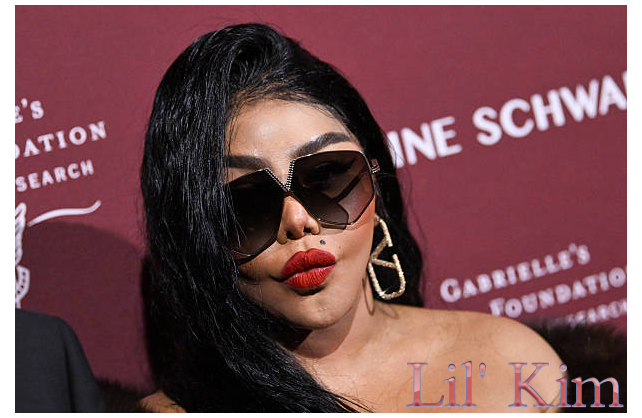
(ThySistas.com) Something happens when a grown woman looks in the mirror long enough. The question creeps in about whose eyes are really doing the judging. For plenty of us those eyes got trained early. Glossy magazines did part of it. Music videos did more. A grandmother warning us to stay out of the sun finished the lesson. Kimberly Denise Jones, the Brooklyn artist the world calls Lil’ Kim, has lived that question out loud for three decades.
By 1996, Kim had arrived like a firework over the East River. Barely into her twenties, the Queen Bee rewrote what a woman in hip hop could get away with. Rich brown skin. Sharp verses. A swagger some read as armor, others as freedom. That solo debut, Hard Core, dropped a young Black woman right at the center of a stage built to keep one out. Folks fought about the lyrics. Nobody could fight the presence.
The cracks showed up early, even at the peak. In a 2000 interview with Newsweek, Kim spoke plainly about where the ache began. “All my life men have told me I wasn’t pretty enough,” the rapper admitted. That criticism came from romantic partners, too. Low self worth, stated without a flinch. Partners kept straying toward women with European features and long hair. Years later, Lil’ Kim revealed that an abusive former boyfriend had broken her nose, leading to surgery. Sit with those confessions from a woman the whole culture had crowned.
Then the look started to change. Slowly at first, later all at once. By the time those 2016 selfies hit Instagram, the shock rolled through timelines like cold water. An apparently lighter complexion. Blonde hair. Features the internet cruelly called unrecognizable. Jokes flew fast. Beneath them sat a sadder current, a recognition most people did not want to name out loud.
None of this grew in a vacuum. The preference for pale skin and a slim nose did not begin with any rapper. Its roots run back through slavery. The brown paper bag test carried the poison forward, using skin tone to decide who belonged in certain social circles. Lighter girls got called pretty. Darker ones got called strong, which rarely landed as a compliment. Generations of Black women absorbed a brutal math that tied value to nearness to whiteness.
That math never retired. It simply changed outfits. Today it surfaces in casting calls that favor racially ambiguous looks. Filters wash a face paler with one tap. Comment sections rank Sistas by shade. Colorism pays a quiet salary, so girls with darker complexions learn the pay scale young. Psychologists Kenneth and Mamie Clark documented the damaging effects of racial prejudice in the 1940s. Their famous doll test found that many Black children preferred the white doll, associating it with goodness. Decades pass. The lesson lingers.
This is not only a famous person’s burden. Skin lightening creams rake in billions worldwide every year. Relaxers were once a staple in countless Black households, promising manageable hair. That convenience sometimes came with scalp damage or more serious health risks. Teenage girls study tutorials on looking less like themselves. Grown women budget for it between rent and groceries. The toll lands on regular households, not just red carpets.
Hip hop deserves a hard look here too. For years the genre’s videos favored women with honey toned complexions. They became the prized accessories draped across a rapper’s arm. Artists with darker skin navigated an industry that often rewarded a narrower image. A woman paying attention learns the formula quick. Shrink the nose. Lighten the complexion. Match the fantasy the cameras keep selling.
Here is where the conversation turns tender. It would be easy to pile on the Queen Bee, to treat the whole saga as vanity gone sideways. That interpretation misses the larger issue entirely. When a woman speaks openly about years of being made to feel unattractive, the grown response is not a punchline. We cannot know every reason behind Kim’s changing appearance. Still, the conversation surrounding it reveals a sickness far bigger than any single superstar. Plenty of us carry smaller versions of the same ache. Quieter ones. Better hidden, no less real.
Maybe you have felt this up close. Ever watched colorism ripple through your own community? A cousin praised for light eyes while a darker friend gets looked past at the cookout. Most of us hold a story like that, tucked where company never sees it.
So what does loving yourself truly ask of Black women in 2026? Not a slogan stitched on a tote bag. It asks for slow, patient unlearning. Catching the voice that whispers your wide nose is a flaw, then telling it to sit all the way down. Choosing the friends and rooms that reflect you whole. Raising daughters who never once hear their coils need fixing to count as lovely.
Change has been creeping in, slow but real. A generation of stars with darker complexions now graces runways and headlines major films. Natural coils crown magazine covers. Little girls have more choices among dolls that reflect their own beauty. The rigged scale has not vanished, yet more of us refuse to keep paying its tax.
For the record, the Queen Bee has not slowed down a step. At 52, Lil’ Kim remains active on the international music scene. This year brought headline appearances at Vivid Sydney and Melbourne’s Rising festival in Australia. The fall included performances alongside the Pussycat Dolls on their PCD Forever reunion tour. Next up is a scheduled November 29 appearance at the Rock The Bells Festival in Newark, New Jersey. Three decades in, the Brooklyn native still owns a stage. Whatever private peace the artist has made with that reflection belongs to her alone.
That is the piece worth holding onto. Lil’ Kim’s journey works not as a cautionary tale for wagging fingers. It lands as an invitation. Sistas get to ask harder questions about who taught us to play small, who profits when we doubt our own faces. Black women have been handed a rigged scale for centuries. We get to crack it. The boldest move a Sista can make is plain. In a world still selling one narrow ideal, stare dead into the mirror. Then decide without apology that the face looking back was always more than enough.
Staff Writer: Brenda Poole
BP writes about entertainment, relationships, faith, and life in general… She enjoys speaking on things Black women can relate to and hopefully giving a sista something useful along the way…
Feel free to email her at BrendaP@ThySistas.com.