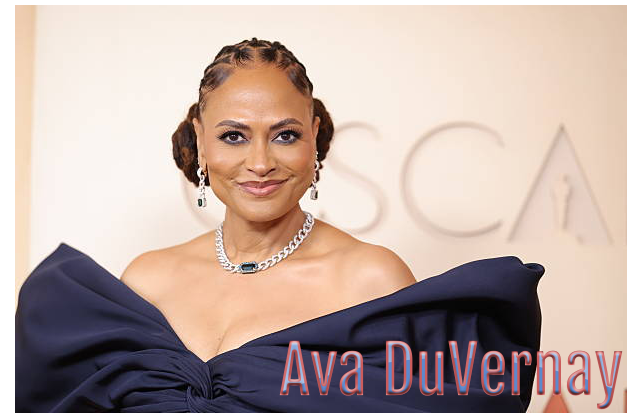
(ThySistas.com) For decades, the screen handed Black actresses a short menu of roles. A maid in one picture. The sassy sidekick in the next. Somewhere in the background, a mother who suffers only so the hero can shine. Ava DuVernay studied that menu, then threw it out.
That refusal sits at the center of everything this director builds. A former publicist, Ava came to filmmaking later than most. The 2010 release of I Will Follow marked a narrative feature debut without a permission slip from the gatekeepers. Maybe that explains why the work shrugs off their rules so easily.
Degrees in English and African American studies from UCLA gave the storytelling a backbone of history. That schooling shows through carefully composed frames, scenes that trust audiences to keep pace, and dialogue that never talks down.
Consider Ruby in Middle of Nowhere, the 2012 drama that earned a Best Director prize at Sundance, a first for a Black woman at that festival. Ruby works as a nurse. Her husband sits behind bars. Lazy filmmaking would turn such a character into a saint or a cautionary tale. What DuVernay offers instead is a thinking person wrestling with loyalty, desire, exhaustion, the slow ache of a life left on hold.
Queen Sugar stretched that vision across seven seasons, from 2016 to 2022. The Bordelon family works a sugarcane farm in Louisiana. Charley runs the business side with a boardroom sharpness television rarely lets Black women carry. Nova balances journalism with spiritual healing while navigating activism, faith and personal desire. Micah, the teenage son, endures a police encounter that shatters his sense of safety. Neither sister collapses into a single trait. Both feel like somebody you came up next to.
Behind the camera, every episode across those years went to a woman director. Of the 42 women hired, 39 were directing scripted television in the United States for the first time. That hiring choice doubled as an argument about who gets trusted to tell these stories.
Beyond television, the ambition kept scaling. The 2014 release of Selma refused to flatten Dr. King into a monument. Instead, we saw a brilliant strategist and a weary husband with human struggles. Four years later, A Wrinkle in Time made Ava the first Black woman to direct a live action movie budgeted past 100 million dollars. By 2019, When They See Us, the wrenching limited series about the Central Park Five, forced audiences to confront the injustice those boys endured.
Documentary filmmaking offered another avenue for confronting injustice. Released in 2016, 13th examined the connection between slavery and mass incarceration through an exception written into the Constitution. That production earned an Oscar nomination alongside a Peabody.
Origin, which premiered in 2023, might be the sharpest proof of the whole project. Pulitzer Prize winner Isabel Wilkerson becomes the beating heart of the film. Grief and intellect collide as the writer develops a sweeping theory of caste. A Black woman thinking, really thinking, for two hours of cinema. How rare that remains. DuVernay financed the movie on independent terms, pulling together some 38 million dollars outside the studio system to protect the vision.
Sometimes the smallest moments on screen reveal the most. A woman alone at a kitchen table, bills fanned out, deciding which one waits another month. One daughter picking words with care around a father who cannot hear them yet. These are not grand speeches. They land as the quiet arithmetic of ordinary life, the stuff mainstream cameras skipped right over whenever the face was brown.
The filmmaker is currently preparing for the wider release of 14th, which premiered at the New York Film Festival on October 9. A limited theatrical run begins November 27 in the United States and United Kingdom, followed by its Netflix debut on December 4. Where 13th asked who gets caged, 14th asks who gets counted. The documentary examines citizenship, equal protection, and efforts by the Trump administration to restrict birthright citizenship. More than fifty experts participated in interviews, including former Librarian of Congress Carla Hayden alongside historians Eric Foner and David Blight.
Other projects are keeping DuVernay busy. A thriller titled Heist of Benin is also in development, reuniting the director with David Oyelowo more than ten years after Selma. Meanwhile, the arts collective ARRAY has been championing female filmmakers and artists of color since 2011. Its work brings overlooked voices into spaces that once shut them out. Oprah presented a Peabody institutional honor for that labor. The Smithsonian added its Great Americans Medal in 2025.
Count the opportunities created because a door finally stood unlocked. Directors like Tina Mabry, Numa Perrier, and Salli Richardson-Whitfield gained television opportunities through Queen Sugar. The generosity is strategic. Lift one storyteller and the whole ecosystem of Black women behind the lens grows a little sturdier.
Representation gets tossed around as a buzzword until you sit with what its absence actually cost. A girl who never sees a version of herself leading the story learns a quiet lesson about personal worth. Flip the script. Watching Charley Bordelon command a room or seeing Ruby maintain dignity through heartbreak sends that young viewer a wholly different message.
Pull back from the credits, though, and a pattern sharpens. The common thread is a stubborn insistence that Black women get to be whole on screen. Vulnerable without being pitiful. Smart without turning cold. Flawed yet funny. Furious one moment and tender the next.
For generations, we Sistas scanned the multiplex for faces that reflected our lived experiences. That search mostly came up empty. DuVernay changed the odds.
None of this reads as charity or a box quietly ticked. It is patient craft rooted in the conviction that our interior lives deserve the big screen. Young Black women entering Hollywood can now see the power of telling our own stories. That is the real inheritance. Sistas writing scripts or building worlds of their own have a blueprint from somebody who refused to compromise.
Hollywood never got to define this one. Turns out the reverse became the truth.
Staff Writer; Raven Jones
Raven writes about music, relationships, and the everyday ups and downs of Black women… She keeps it honest, encourages other sistas, and can be reached at RavenJ@ThySistas.com.