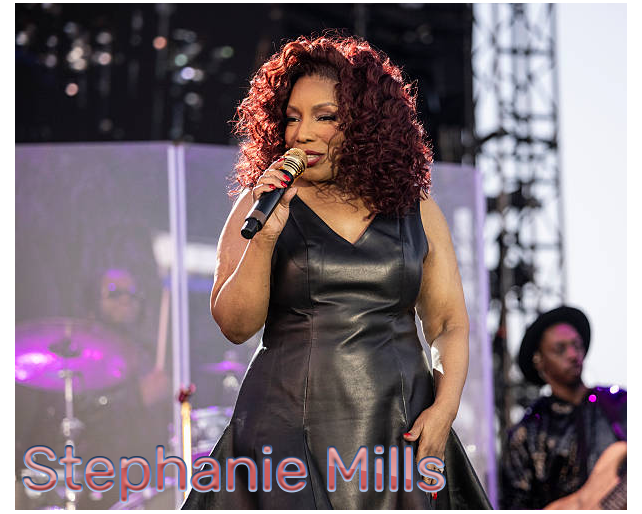
(ThySistas.com) Walk into an arena where Stephanie Mills is performing, and you will feel something the record business never figured out how to bottle. A woman closing in on seventy strides to the microphone, lets the opening notes of “Home” settle over the crowd, and suddenly nobody in the building cares one bit about who is trending. Stephanie Mills has been commanding rooms like this since before half of today’s chart stars drew their first breath. That voice still refuses to ask anybody’s permission to show up.
Here is a teenager from Brooklyn, and she lands the role of Dorothy in the original Broadway production of The Wiz in 1975. Then she opens her mouth on “Home” and turns it into one of those songs that still makes grown folks tear up at a wedding. The show celebrated fifty years in 2025. Think on that. Half a century later, that ballad can still bring a room to its feet, just as it did back when disco ruled everything.
Nine years old, and that little girl was already out there performing. The stage basically did half the work her mama started. Now, most kid stars burn out the second they stop being adorable. Bad money gets them. Burnout gets them. Folks hanging around with their hand out and no loyalty in their heart get them too. This one? She made it through decades of an unforgiving business, carrying the gift into grown stardom with her feet planted and her mind clear. Six decades of practice will do that for a person. Few entertainers have logged that kind of experience.
Pull up the catalog and the receipts speak plainly. “Never Knew Love Like This Before” earned a Grammy in 1981 for Best Female R&B Vocal Performance, and that silky confession still fills dance floors whenever a deejay has sense enough to spin it. Radio could not get enough of “I Have Learned to Respect the Power of Love” or “Sweet Sensation,” both proof of a vocalist who treated every lyric like it mattered. Later cuts such as “Something in the Way You Make Me Feel” and “You’re Puttin’ a Rush on Me” kept the streak alive, quiet masterclasses in phrasing. The Wiz itself hauled home seven Tony Awards, cementing the launchpad that sent a Brooklyn kid toward soul royalty. Decades of musical achievements tell you the gift was never a fluke.
Fast forward to the present moment. The Queens: 4 Legends, 1 Stage tour became one of the most celebrated gatherings in R&B, pairing our girl with Patti LaBelle, Chaka Khan, and Gladys Knight. Audience demand helped carry the production into additional performances, giving music lovers more opportunities to see four extraordinary women share the stage. Here sits the detail that ought to make every executive straighten up. Those Sistas are still stepping onto major stages and delivering the songs generations grew up loving. Their performances remind audiences that experience, vocal discipline, and genuine stage presence cannot be manufactured in a recording studio. Four legends who have been at this for decades, still commanding attention through the sheer force of their talent. That is the kind of staying power the music industry ought to celebrate instead of treating like some rare exception.
Now hold that picture against what gets demanded of younger singers today. Some twenty three year old blessed with a stunning instrument will get three singles to prove she moves product, maybe a generous four, and then the suits start murmuring that her moment has cooled. Reinvent, they tell her. Chase whatever sound is popping on the apps this week. Shave a couple years off the bio, hide the birth certificate, do anything that keeps the algorithm curious. Pressure of that kind would flatten most people, and it has flattened plenty of promising artists who deserved a far longer runway. The ugly message hiding underneath feels painfully familiar, particularly for Black women in this business. Be fresh, be flawless, be gone before anybody clocks your real age.
Our heroine built a wholly different blueprint. Rather than wait for some label to decide whether the magic had faded, the Brooklyn native took greater control of her recording career through her independent label, JM Records. That decision gave her more freedom to release music on her own terms, away from some of the pressures that traditionally come with major record companies. Taking charge of your music, making your own decisions, and refusing to let somebody in a corner office determine your future, that is grown woman business done right. The decision also whispers something firm about staying power. You remain relevant by refusing to let anyone else define the word on your behalf. Around the way, we simply call that knowing your own worth.
And Stephanie is hardly slowing down. Audiences received a fresh recording in 2025, a house flavored version of “Ain’t No Mountain High Enough,” the Ashford and Simpson classic that Diana Ross helped make famous. It was another reminder that Stephanie still enjoys making music rather than simply revisiting yesterday’s hits. Festival crowds have caught recent performances too, including an appearance at the Jazz in the Gardens Music Festival down in Miami Gardens. Between performances, the legend continues pouring love and energy into her son Farad, who has Down syndrome. Her devotion also extends to advocacy through the 444LOVE Foundation, supporting individuals with Down syndrome and their families. Picture a full life in motion, not some sentimental farewell lap.
The tenderest stretch of the night arrives during “Home.” Behind the band, a screen lights up with the faces of beloved entertainers who have passed, including Michael Jackson, Aretha Franklin, Whitney Houston, and Luther Vandross. These were giants who poured themselves into the culture before leaving us far too soon. Try singing about the comfort of belonging while the people who once felt like home stare back at you from that screen. Most performers do not own the kind of emotional strength that takes. Grief and gratitude somehow share the very same breath up there. Anybody who has buried someone they loved knows precisely what that moment costs.
Here is what keeps turning over in my mind as a grown woman who came up on this sound. I played it at cookouts, wept to it after breakups, and blasted it driving home from a double shift. Nobody handed this icon a map for aging in public with that much grace. Youngbloods rising today get to watch living proof that the gift does not evaporate at forty, or fifty, or sixty. Skill can deepen. Phrasing grows wiser. The lived stories behind each lyric gather a weight you simply cannot counterfeit at twenty two.
Life has taught me to question the myths our culture repeats until people start treating them as facts. One of the biggest myths in popular music is that female singers carry a sell by date stamped somewhere between their shoulder blades. Our Dorothy has spent fifty years peeling that label off and pitching it in the garbage. Respect, in this instance, never gets requested politely. When the band kicks in, the admiration shows up on its own, no asking required, right as that first note cuts the air.
Think about that the next time some jittery label suit wrings his hands over whether a vocalist past forty can still move a room. Send him to an arena filled with people cheering for a Grammy winner who walked onto a stage as a child and never glanced backward. What sits in that room belongs to all of us, to every one of the Sistas side eyeing the calendar, wondering if her time is almost up. Talent does not expire. Soul does not spoil. And Black women with something real to say earn the right to say it for as long as the good Lord keeps breath in the body.
Staff Writer: Brenda Poole
BP writes about entertainment, relationships, faith, and life in general… She enjoys speaking on things Black women can relate to and hopefully giving a sista something useful along the way…
Feel free to email her at BrendaP@ThySistas.com.