
(ThySistas.com) Every now and then someone walks in and the whole room has to shift to make space. A girl out of Portsmouth, Virginia did that to rap. Ignored near about every rule the place tried to press into her hands, and kept on walking.
Back before Missy, a female artist was handed a short list and told not to lose it. Look good. Sound sweet. Sit pretty while the fellas worked the boards. And match the exact kind of beauty the magazine covers had settled on long before you ever showed up. Then Misdemeanor dropped in 1997 with a debut called Supa Dupa Fly, and that little list started looking like a joke somebody forgot to throw out.
I was grown enough back then to remember the shock of it. That first clip for “The Rain” had this odd, glorious vision of a performer in an inflatable suit, puffed up like a trash bag with attitude, filmed through a fisheye lens so the whole frame bent around the shot. The industry had plenty of ideas about how female performers were supposed to look. What landed on our screens instead was gloriously strange. And it worked. The song caught fire, the album went platinum, and a lot of us sat up and paid attention.
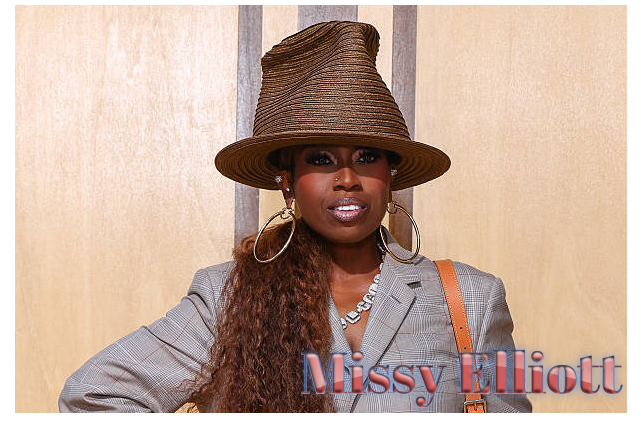
Here is what mattered to Black women watching at home. For years the message, spoken and unspoken, had been that our worth as entertainers was tied to a single shape and a single shade of acceptable. Instead, the Virginia native tore that notion to confetti. Nobody shrank. And no airbrushing her into a stranger. A full-figured sista from down South built an empire out of exactly who she already was, and the business had to adjust its expectations rather than the other way around.
Then there was the humor, which people still undersell. So much of pop asks performers to be untouchable, flawless, a little cold. Not Melissa. Humor was half of what she was doing up there. Flipping a vocal line backward, cracking on herself, turning a club record into a cartoon you wanted to live inside. “Work It” in 2002 had that reversed hook nobody could spell and everybody could sing, and the clip treated the whole thing like play. Letting yourself be funny takes a confidence that beauty standards usually try to drain out of us. Grown sistas felt that one deep, somebody finally laughing at the rules while outselling the people who wrote them. That was its own kind of lesson, and it stuck.
Those videos did heavy lifting all by themselves. Working repeatedly with director Dave Meyers, the Portsmouth artist built worlds that looked like tomorrow arrived early. Bodies twisting and hanging upside down through the strange industrial world of “Get Ur Freak On.” UFOs, farm imagery, outrageous costumes, beauty pageants, and Missy towering over a city like some futuristic force of nature in “Pass That Dutch.” Long before half the genre discovered the word, the aesthetic read as pure Afrofuturism, treating Black imagination as a destination instead of a decoration. Little girls saw bold colors, impossible worlds, and bodies moving in ways nobody had drawn up inside a label meeting. Representation that specific does something to a child. It tells her the frame can stretch to fit who she is, and never the reverse.
None of this came cheap. We later learned that the icon spent years dealing with Graves’ disease, an autoimmune thyroid disorder that brought severe physical symptoms, including tremors and major weight changes. Elliott has also spoken openly about being an introvert who wrestled with anxiety despite that enormous stage persona. So the swagger we saw was not the absence of struggle. It was a decision made on top of struggle, which is the only kind of courage that counts for much of anything.
Look at everything that one run cracked open. The records by themselves bent radio sideways, because whatever got built in the studio with Timbaland gave R&B and hip hop a fresh way to talk, and folks are still lifting from it. Count up the stars who came after. Some got strange on purpose. Others quit treating their body like an apology. Plenty grabbed the pen and the boards and the camera rather than wait on a man to pass them a song to sing. That road got paved by a certain dreamer from the Virginia Tidewater, and most of them know it.
And the honors kept arriving, the kind that outlast any chart position. In 2019 came entry into the Songwriters Hall of Fame. A few years after that, history again, as the first female rapper inducted into the Rock and Roll Hall of Fame in 2023. Then NASA, of all institutions, beamed “The Rain” toward Venus in 2024, making it the first hip hop song transmitted into deep space. You could not write fiction better than that.
Two summers ago, the hip hop pioneer finally did the thing fans had begged for across nearly thirty years. “Out of This World, The Missy Elliott Experience” rolled through North American arenas from July into August 2024, the very first headlining tour of a career stretching back to the Clinton administration. Family by design, the lineup carried Busta Rhymes, Ciara, and longtime partner Timbaland right along for the ride. Crowds called it less a concert than a journey, all intergalactic staging and costume changes and a catalog hitting like a tent revival.
Now, with those arena dates behind her, Elliott still sounds like somebody looking forward rather than living off yesterday. In 2025 she spoke about experimenting with new music and said she hoped to get back on the road. Then in 2026 she turned up alongside Kehlani on “Back and Forth,” another reminder that Missy has not disappeared into some museum case marked legend. No new headlining tour has been officially announced, and there is no reason to dress rumor up as fact. What matters is simpler. A grown artist in middle age is still creating, still collaborating, and still being chased by the audience, not the reverse.
Let me land this where it belongs, with the Sistas it was always really about. This lesson was never only musical. It was permission. Permission to be loud, soft, funny, strange, large and brilliant, all at once, without filing down a single edge to make somebody at a label comfortable. Generations of Black women grew up watching one of our own refuse the box and get rich, respected, and remembered doing it.
So where does the real inheritance sit? Forget the beats a second, much as the beats knock, and set that crowded trophy shelf aside too. What lasts is the proof, laid down in platinum and stadium light, that we were never required to squeeze ourselves into somebody else’s cramped idea of what belonged on a stage. Black women hold whole universes, and one dreamer from Portsmouth got the entire planet moving to that fact. And honey, she is nowhere near finished.
Staff Writer: Brenda Poole
BP writes about entertainment, relationships, faith, and life in general… She enjoys speaking on things Black women can relate to and hopefully giving a sista something useful along the way…
Feel free to email her at BrendaP@ThySistas.com.