
(ThySistas.com) There is a lesson the most accomplished women among us tend to learn early, and rarely gently. Competence and popularity are not the same currency, and the exchange rate between them has never once been fair. Excellence earns admiration right up until it begins to inconvenience the people grown comfortable with things as they are, at which point the applause thins into something guarded and cool. We have seen that shift across boardrooms and pulpits and courtrooms for as long as anyone can remember. Right now the entire nation is watching a single justice navigate that tension in real time.
Justice Ketanji Brown Jackson has spent four years now living under the harshest lights this nation keeps trained on public servants. Confirmed in 2022 as the first Black woman to sit on the country’s highest bench, a jurist raised in Miami and educated at Harvard stepped into a marble building that was constructed long before such an arrival was imagined, and got straight to work. No honeymoon came stitched into the robe. Her appointment carried the weight of history, but the daily work still required questioning attorneys, examining constitutional arguments, writing opinions, and occasionally disagreeing with colleagues whose interpretations of the law differed from her own.
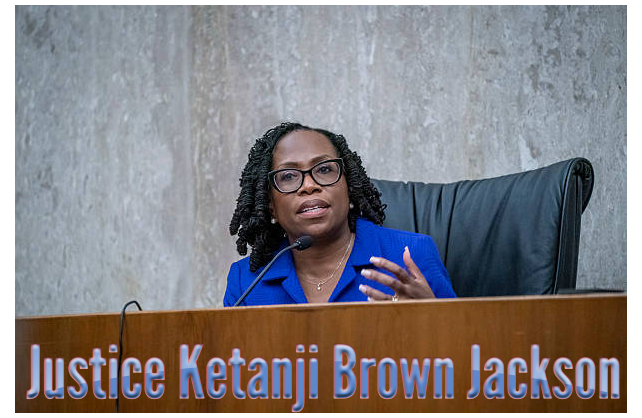
Here is the part folks keep confusing. Brilliance and popularity are not cousins. They are barely on speaking terms. A mind that questions, probes, and refuses to nod along on cue can make people uneasy, because agreement is comfortable and genuine thinking is not. Jackson has established a particularly active presence during oral arguments. Last term, running from October 2025 through the spring of 2026, she accounted for nearly 22 percent of the words spoken by the nine justices during oral arguments, according to a Washington Examiner review of the transcripts. Sit with that. More than anybody else on the bench. And when the rulings finally landed, the written record repeatedly found her disagreeing with the majority, sometimes in opinions bearing her name alone.
That combination, outspoken in the room and sometimes isolated in the result, illustrates the distance between independence and applause. Look at what unfolded this past August. When the majority temporarily lifted a lower court’s injunction blocking parts of the Trump administration’s proposed changes to mail voting ahead of the 2026 elections, the disagreement produced a 23-page dissent from Jackson. The majority considered the states’ legal challenge premature rather than deciding whether the underlying executive order was constitutional. Jackson argued that the decision risked introducing unnecessary uncertainty into an election season already underway. What stood out was that her objection appeared on its own paper. Sotomayor had written a separate dissent, and Kagan had joined it, yet Jackson chose to explain her concerns in language of her own. Whatever one’s interpretation of the legal questions, the episode offers a clear example of a justice choosing to put an individual argument into the public record.
Consider the written record itself. Earlier in the spring, in the Louisiana map fight called Callais, the majority ruled that a congressional district drawn to provide Black voters with greater electoral representation constituted an unconstitutional racial gerrymander. Justice Elena Kagan authored the principal dissent, joined by Sonia Sotomayor and Jackson, warning about the implications for protections against racial vote dilution. Days later, Jackson issued her own separate dissent concerning the disruption the ruling had created for Louisiana’s ongoing elections. Then, on September 24, came a public appearance at the University of the District of Columbia’s law school, where she questioned the Court’s increasing reliance on its emergency docket. Her concern centered on the practice of resolving consequential disputes through expedited proceedings, sometimes without full arguments or detailed explanations. She called for greater restraint from her colleagues. Raising institutional concerns from within the institution itself places those disagreements before the public, where they can be examined rather than left behind closed doors.
Now, Sistas, let us sit with the pressures that can accompany such visibility. Every syllable spoken by a woman occupying a historic position becomes part of a larger public conversation. Praise her and questions may arise about whether people are celebrating the achievement or evaluating the work. Question her and another debate begins over whether the criticism concerns the substance of her reasoning or the expectations placed upon women in positions of authority.
That scrutiny can become personal quickly. If you have ever been the only face like yours at the conference table, in the department meeting, or up on the leadership retreat, you already know the arithmetic by heart. Twice as good for half the welcome. Perform flawlessly and still leave wondering why the space went quiet the moment you opened your mouth. Black women have been confronting those expectations for generations, in classrooms and boardrooms and choir lofts and courtrooms. Plenty of Black women reading this have probably felt some version of that experience long before reaching the end of this paragraph.
There is another dimension to Jackson’s public life that deserves attention beyond the disagreements surrounding her judicial opinions. Lovely One, the memoir published in September 2024, became a number one New York Times bestseller, recounting a family’s journey from segregation to the Supreme Court within a single generation. Its title comes from her given name, Ketanji Onyika, meaning Lovely One, suggested by an aunt who served in the Peace Corps in West Africa. This year the book became the centerpiece of Portland’s Everybody Reads initiative, with eight thousand free copies distributed through libraries and high schools across Multnomah County. Jackson appeared at the program’s concluding event in March 2026, bringing her story of education, perseverance, family expectations, and personal ambition to readers beyond the courtroom. Picture a woman whose professional life is constantly examined stepping outside that environment to share the experiences that shaped her. As these words go to print, another Supreme Court term is approaching, with oral arguments scheduled to begin October 5. Her memoir and judicial writings offer two different windows into a life that extends well beyond the public disagreements of any single season.
Here is what I want my Sistas to carry out of all this. Favorite was never the assignment. Nobody should have to make universal adoration the price of doing meaningful work, and the people selling you that fantasy are often the ones who benefit when you shrink yourself down. A daughter of two public school educators arrived at that chamber carrying a lifetime of preparation, a professional record, and responsibilities that require far more than a pleasant public image. Ketanji Onyika has spent her years on the bench questioning, writing, explaining her disagreements, and adding her interpretation of the law to a record that will remain long after today’s arguments have faded. Her colleagues will continue reaching their own conclusions, legal scholars will continue debating those opinions, and the public will have its say. None of that requires popularity to be confused with professional accomplishment. Popularity is weather. Integrity is climate.
So the next time somebody hints that a gifted woman owes the world a smile to go along with her intelligence, remember the jurist willing to put her disagreements into writing even when nobody else signs on. Correct and welcome do not always arrive together. Honest and applauded rarely share a calendar either. A Black woman does not owe anybody a place on a favorites list simply to have her work examined seriously, her qualifications acknowledged, or her voice heard without being reduced to a personality contest. Some of us learned that lesson from our grandmothers, who understood the difference between being respected and being liked long before anybody invited them into a boardroom. Jackson’s experience offers another occasion to consider that distinction. Opinions can be challenged, arguments can be debated, and disagreements can remain disagreements. None of those things should require a woman to make herself smaller simply because the room finds her voice inconvenient.
Staff Writer; Jada Williams
This sister writes about politics, money, family, and the issues that shape everyday life… Her work looks at how decisions made in government, changes in the economy, and challenges within our communities affect Black women and their families…
Feel free to email her at: JadaW@ThySistas.com.