(ThySistas.com) Some of us remember exactly where we sat the first time Brenda Jenkins sauntered across the screen. This was NBC in 1985, the TV going in the front room while somebody’s mama hollered about supper. A Los Angeles kid named Regina King was up there on 227, playing Brenda like the part came standard. Fourteen years old. Not even old enough to drive, and already holding a scene with Marla Gibbs without getting swallowed up. Nobody hands a girl that kind of nerve. You either have it or you spend a lifetime faking it, and King plainly had it.
Most kid actors do not get this ending. They peak early, the cameras move on, and twenty years later they are a trivia question at somebody’s cookout. We have all seen that movie. The sitcom kid grows up, and nobody will let her be anything other than the sitcom kid. King rejected that script entirely, and the way it was done deserves a closer look, especially for those of us who have spent years quietly in her corner.
After 227 wrapped in 1990, King faced the familiar challenge of escaping a successful television character. Instead of allowing Brenda Jenkins to define her future, she moved toward more dramatic film roles. John Singleton cast the young actress in Boyz n the Hood in 1991, a film that shook a generation, and Poetic Justice arrived two years later, opposite Janet Jackson and Tupac. By 1995 the credits ran from trading jokes in Friday to, soon after, holding emotional ground in Jerry Maguire. None of these were the kind of showy parts that win trophies. They were bricks, though, and a career was rising from them.
King never acted like there was something to prove. The work just piled up, one honest job after another, each one a little harder than the last. Playing Margie Hendricks in Ray in 2004 meant stepping in the ring with Jamie Foxx, and the reach for more was plain on screen. Television gave the range more room. Southland happened. Then came The Boondocks, two characters voiced across the better part of a decade, with a recurring run on The Big Bang Theory stacked on top. Comedy, drama, cartoons, none of it threw her. By this point King picked the work and made it land, permission be damned.
Then everything shifted.
John Ridley’s anthology American Crime handed over a run of broken, complicated roles to sink into, and the industry finally paid real attention. Two Emmy wins came out of it, in 2015 and again in 2016. A third arrived soon after for Seven Seconds on Netflix. Watchmen arrived on HBO in 2019, and King’s commanding performance earned her a fourth Primetime Emmy Award in 2020. Four Primetime trophies, for four completely different women, each one aching in her own particular way. By that point nobody was calling King the girl from that old sitcom anymore. The whisper now was simpler: one of the finest actresses alive, full stop.
And yet the crown jewel arrived on the big screen.
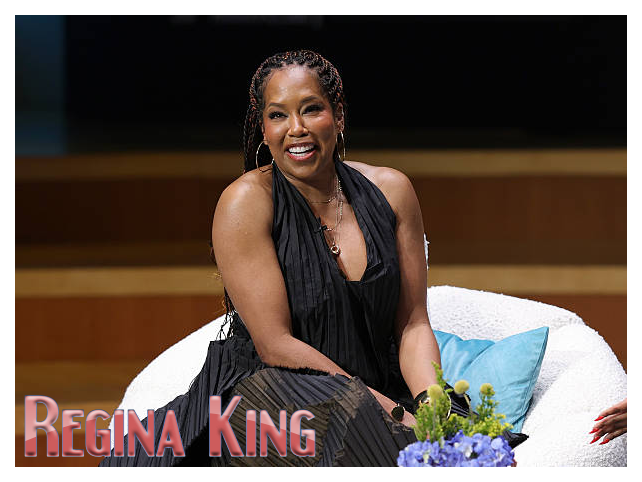
Barry Jenkins adapted James Baldwin’s novel If Beale Street Could Talk in 2018, casting King as Sharon Rivers, a mother who flies to Puerto Rico to protect her daughter’s future. The performance is a masterclass in restraint. Barely a raised voice in the whole thing, yet you feel every ounce of a mother’s love and dread pressing against her ribs. The Academy agreed. In February 2019 came the walk to that stage and the Oscar for Best Supporting Actress, and a whole lot of Sistas watching at home felt that win land in our chests like it belonged to us.
What makes the moment hit different is the arithmetic of it. More than three decades separated Brenda Jenkins from that golden statue. That is a long stretch of unglamorous labor, of being underestimated and overlooked and cast as the best friend when the lead was right there for the taking. Black women in this industry know that math intimately. We understand how long the road runs, and how rarely it ends at a podium. That understanding has been passed down for generations, and we recognize one of our own the moment she finally gets her flowers.
King was not finished, though. Not even close.
The directing did not come from nowhere. Years of cutting teeth on television came first, episodes of Scandal and This Is Us and Being Mary Jane, the job learned one set at a time. In 2020 came a feature, One Night in Miami, which dreams up a night in a motel room with Malcolm X, Muhammad Ali, Jim Brown, and Sam Cooke hashing out what their fame was even for. King called it a love letter to Black men, and it played like exactly that. Critics took the work seriously from the jump, a courtesy rarely extended to actresses who cross over.
King returned to acting in the 2021 Western The Harder They Fall, portraying the formidable Trudy Smith. By 2024, she had taken on another substantial role, playing Shirley Chisholm in the Netflix biopic Shirley, directed by John Ridley. Chisholm made history in 1972 as the first Black woman to seek a major political party’s presidential nomination. Think about the symmetry there. One trailblazing sister playing another, both of them refusing to wait on the world to make room.
Behind those professional achievements was a personal tragedy that changed King’s life. Her only child, Ian Alexander Jr., died in January 2022. Grief like that does not leave a person where it found them, and in the time since, the subject has come up in King’s own words, plainly, with nothing dressed up. A step back followed. For a spell the work went quiet while a mother tended to her own healing. When someone who has given the public that much decides to protect her own heart, the only decent response is to grant the space.
So what occupies her at this current time?
Still reigning, as it turns out. Earlier this year, King served as ambassador for the 30th anniversary of the American Black Film Festival in Miami Beach, participating in a featured Legacy Talk celebrating her career and welcoming a fresh wave of storytellers the way the elders once did for a teenager from 227. Royal Ties Productions, the company she established with sister Reina, continues to represent another side of her creative ambitions, with projects in development. Audiences also caught the actress in theaters in 2025 opposite Austin Butler and Zoë Kravitz in Darren Aronofsky’s crime thriller Caught Stealing. Four decades into her career, Regina King still has audiences eager to discover what she will do next.
So here is the thing worth taking from all of it. King figured out early what plenty of folks never figure out at all, that the role everybody knows you for does not get to be the last word. Brenda Jenkins was a start, not a sentence. What people clock you for at fifteen can shrink down to a line in the bio by fifty, long as you keep turning in new work and refusing to coast.
Young Sistas coming up ought to look hard at how it was actually done. Forget the red carpets. Watch the choices. The patience to wait on the right thing. The grind of taking some small, forgettable part and making nobody able to forget it. And the backbone to tell a network, a studio, a crowd still stuck on the old show, that none of them set the ceiling.
Regina King took a teenage sitcom check and built something that outlasted everybody who doubted it. Four decades in, the proof is just there in the work, what you get when real talent refuses to quit and keeps on going. For every girl ever told she is only good for one thing, that name is a rebuttal. Brenda Jenkins was the beginning. The woman who grew out of her is still, gloriously, being written.
Staff Writer; Raven Jones
Raven writes about music, relationships, and the everyday ups and downs of Black women… She keeps it honest, encourages other sistas, and can be reached at RavenJ@ThySistas.com.