
(ThySistas.com) Something unfolded in Arlington last weekend that plenty of us are still turning over in our minds. Rep. Jasmine Crockett walked onto the stage at AT&T Stadium during the R&B tour stop, stood beside Chris Brown, Texas state Rep. Venton Jones and producer RoccStar, and announced a Congressional Record recognition honoring both Brown and Usher. She told the stadium crowd they were witnessing Black joy at its highest level, and she wanted the artists’ contributions documented in the federal legislative record. The crowd roared. Cameras flashed. Crockett and Brown shared a hug.
And a whole lot of grown Sistas watching at home went quiet.
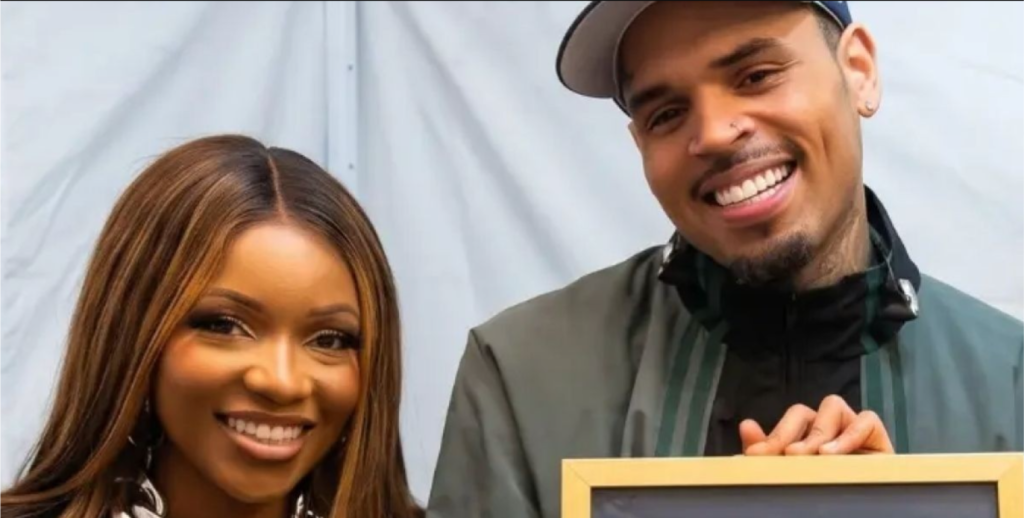
Not because the tour lacks meaning. It carries plenty. Two of the biggest names in the genre share one stage, pack a football stadium, and give folks their money’s worth. I understand the pull. Those songs have soundtracked cookouts, weddings, and more than a few evenings in my own kitchen with the windows thrown open. Nobody is pretending the catalog fails to move a room.
The trouble sits somewhere else entirely.
Chris Brown pleaded guilty in 2009 to felony assault involving his girlfriend at the time, Rihanna, and photographs showing her injuries became part of the public memory surrounding the case. He was young, true. People do grow, also true. Yet his legal history did not end there. In 2017, Karrueche Tran obtained a restraining order after accusing Brown of threatening and physically abusing her. Those claims were allegations contained in her court filing. More recently, in July 2026, Brown pleaded guilty in London to affray stemming from a 2023 nightclub confrontation. Prosecutors dropped more serious assault charges as part of the resolution, and sentencing is scheduled for October.
So here is the knot I keep tugging, and I doubt I am alone in it. Can we love somebody’s music yet decline to publicly celebrate the person behind it? Do we get to sing every lyric and still question whether formal recognition from an elected official should follow?
Those strike me as two separate acts.
Nobody with good sense is begging radio stations to bury his hits or ordering you to wipe your playlist. That remains your business, your car, your speaker. The songs already exist. They will keep existing whether any of us approve of the singer or not. Streaming a track is a private choice, and private choices belong to you alone.
A Congressional Record recognition is a different animal. No playlist here. This is an elected member of Congress using the official federal legislative record to recognize an individual publicly. It does not mean Congress as a whole voted to honor that person, nor does it amount to an endorsement by the entire federal government. Still, an entry made by a member of Congress carries a different kind of public significance than one fan deciding what to play through her speakers. Crockett’s recognition of Brown and Usher was entered into that official record as a celebration of their artistic contributions.
Right there is where some Sistas felt the floor shift.
Because the larger conversation reaches beyond one concert. Black women have long debated how communities respond when famous men are accused or convicted of harming women, and how much weight should be given to talent, rehabilitation, accountability and time. Some people believe artistic achievement can be recognized separately from a person’s misconduct. Others believe a formal public honor inevitably says something about the person receiving it. Those positions collide hard in a case involving somebody whose music has remained enormously popular despite a documented criminal history.
That tension helps explain why Crockett’s appearance generated such a strong reaction.
Let me be fair to her for a beat, because fairness counts. Jasmine Crockett did not organize the tour, and she was not the only elected official involved in the recognition. Texas state Rep. Venton Jones appeared onstage as well, and Brown received a State of Texas legislative recognition alongside Crockett’s Congressional Record acknowledgment. Producer RoccStar was also involved in coordinating the moment. In front of a roaring stadium crowd celebrating two successful R&B careers, the presentation was framed as a celebration of music and Black cultural achievement.
Intent matters. Impact matters too. Both can exist at once.
The question sitting squarely in front of us is whether celebrating the music became tangled with publicly celebrating the person. Critics of Crockett’s appearance have argued that Brown’s documented history made the honor inappropriate, while others have defended the ability to recognize his artistic impact separately from his past conduct. That disagreement is really the heart of this entire conversation.
Reasonable folks can land on different sides of that line. Holding public office adds another layer because an elected official’s ceremonial actions receive scrutiny that an ordinary fan’s choices never will. Every public appearance can be interpreted not merely as personal enthusiasm but as a statement about what deserves recognition.
One more layer deserves a seat at this table, and it involves timing.
Crockett is approaching the end of her current House tenure after losing the Democratic primary for U.S. Senate to James Talarico in March. Her House term ends in January 2027, but she has made clear that disappearing from politics is not the plan. After the primary, Crockett created the Fueling Individual Rights Everywhere, or FIRE, PAC and has traveled around the country supporting candidates through it, with particular attention lately to down-ballot races.
Which means this is also a chapter about what Crockett does after Congress. Her public appearances, endorsements and political organizing are helping define what that next chapter looks like. That does not automatically make one concert appearance more important than it was, but it does explain why people who follow her career are paying attention to the choices she makes outside the halls of Congress.
None of this requires tearing a Sister down. Black women in public life already receive enormous scrutiny, and disagreement with one decision does not require dismissing an entire career. What happened in Arlington instead opens a broader conversation about celebrity, accountability, forgiveness and the difference between enjoying somebody’s work and formally recognizing the person who created it.
So I will hand it to you, because this conversation belongs to us. Will you dance to the record and still keep your hands in your pockets when an elected official invites you to clap for the person? Where does that line fall for you? And did Jasmine Crockett’s recognition of Chris Brown cross that line for you, or did she simply separate the artist’s accomplishments from the man’s history in the same way millions of listeners already do?
Talk to me. I am listening.
Staff Writer; Jada Williams
This sister writes about politics, money, family, and the issues that shape everyday life… Her work looks at how decisions made in government, changes in the economy, and challenges within our communities affect Black women and their families…
Feel free to email her at: JadaW@ThySistas.com.