(ThySistas.com) My mother used to say a woman ought to have one good trade and stick with it. Learn it deep, do it right, and let folks know you by that single thing. Solid advice for 1975, maybe. It never quite fit the shape of what Jemele Hill would become.
Look at how she moves through her field and the pattern jumps out fast. The young reporter who started out at the Raleigh News & Observer grew into a sports columnist, a national television anchor, a podcast host, a memoirist, and a media entrepreneur. Somewhere in there she picked up a microphone and helped build a whole company. Go on and try squeezing that onto a business card.
Here is what keeps pulling at me. When a Black woman shows real skill in one arena, the wider world tends to hand her a category and expect her to live there quietly. You are the sports girl. Or the political one. Maybe the culture writer who says the sharp thing on cable and then hushes. Pick your seat, sugar, and please don’t get up. Hill never accepted that arrangement, and her whole run proves the rest of us don’t have to either.
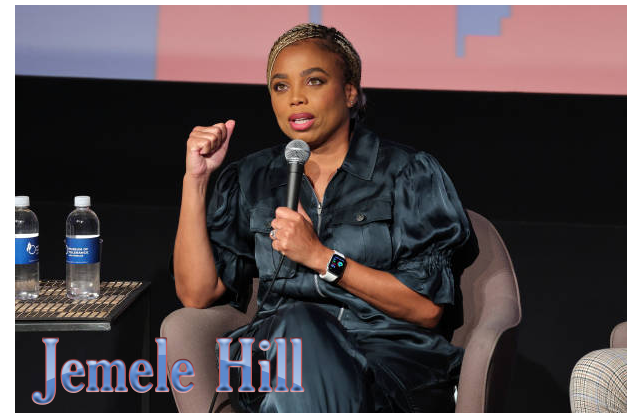
Begin where it began. Raleigh first, then Detroit, sports writing, a beat most people still picture as belonging to men who never learned to knock before entering a locker room. Hill joined the Detroit Free Press in 1999 and spent six years covering Michigan State football and basketball before becoming a columnist at the Orlando Sentinel. ESPN came next in 2006. She covered games the way a preacher works a difficult text. The final score was never simply the score. Underneath sat questions of race, money, power, and who gets cheered while somebody else gets punished for the very same behavior. She saw every bit of it and refused to play dumb.
Jemele columns became an even bigger part of her public voice, including her later work at The Undefeated. Her voice sharpened there into something you could quote back to your cousin over Sunday dinner. She could break down what happened in sports and, in the same breath, tell you what she believed it revealed about the country surrounding it. Precise. Never watered down simply to spare somebody’s comfort.
Then came 2017. Folks who had never watched a single highlight learned her name overnight, and not for anything she wrote about a game. Hill wrote on Twitter that President Donald Trump was a white supremacist, setting off a national controversy and drawing criticism from ESPN. The network did not suspend her for those tweets. Weeks later, ESPN suspended her for two weeks after another series of posts involving Dallas Cowboys owner Jerry Jones, anthem protests, and the team’s advertisers. ESPN described the episode as a second violation of its social media guidelines. The controversy changed the public conversation around Hill, but it did not make her retreat from subjects beyond sports.
She eventually left ESPN in September 2018 after more than a decade with the network. A staff writer’s position at The Atlantic followed the next month, and in 2019 she rolled out her own podcast, Jemele Hill is Unbothered. The show gave her room to move between sports, entertainment, politics, race, and culture while sitting down with filmmakers, athletes, comedians, entertainers, and other public figures.
When one chapter wrapped, she simply constructed the next. By 2026 Jemele was working across more than one show at a time, reunited with Cari Champion for Flagrant and Funny, a program that moves through women’s sports, culture, and whatever else the two feel deserves a conversation. Hill also hosts Image Unscripted, an NAACP Image Awards original series centered on the people shaping Black culture. This woman does not sit around waiting for permission to speak. She builds the space and waves you inside.
And mind you, she has helped build something she can call her own. Hill and longtime friend Kelley L. Carter co-founded Lodge Freeway Media, a production company created with an emphasis on telling stories about people of color, particularly women. That is the entrepreneur piece, and it carries real weight. Plenty of folks reach the summit and yank the ladder up after themselves. Hill’s work has repeatedly created room for voices that traditional media can overlook.
Somewhere in the thick of all that came a memoir. Uphill arrived in 2022 and told her story with the same candor she brings to nearly everything else. The book took readers through family, ambition, journalism, public controversy, and the personal experiences behind the woman millions knew from television. A book for children sits on the runway now too. Unapologetically You, illustrated by Jessica Gibson and scheduled for January 12, 2027, encourages young readers to embrace who they are without shrinking themselves for somebody else’s comfort. Author. Add another title to the pile.
Now here comes the part I want my Sistas to sit with a minute. Each of those arenas carries its own expectations. Sports journalism had one idea of who she ought to be. Television had another. Political commentary opened an entirely different set of arguments around her. Publishing asked audiences to encounter her outside the television screen altogether. Every new door carried another opportunity for somebody to decide where Jemele Hill supposedly belonged. She kept right on walking.
Why does this land on Black women harder than on almost anybody? Partly because range can make people uncomfortable. A person who can do six things well cannot be tidily managed, cannot be flattened into a single neat quote, cannot be waved off whenever she moves beyond the subject somebody assigned her. So the culture sometimes strains to shrink her back down to a manageable size. Stay in your lane becomes the mannerly version of sit down and behave yourself.
More than two decades in, her answer has not budged. No, thank you.
Lord, do I think about the ones rising up after her. The girls filing a first byline at some small paper nobody reads, or taping a first episode in a bedroom closet because the hanging clothes soak up the echo. They are absorbing something their grandmothers were rarely permitted to believe. You get to be more than a single thing. Be the reporter and the storyteller and the boss all at once. Your gifts owe nobody an apology for arriving plural.
There is quiet dignity in turning down the box, and there is shrewd strategy underneath it too. Every fresh arena she entered became a cushion for the next. When television changed, the writing remained. When one program ended, another platform could take shape. Diversifying was never merely vanity. It was survival wearing the costume of ambition, the very same arithmetic our mamas ran while holding two jobs plus a side hustle and somehow still making choir rehearsal.
So no, a sister does not need one trade and nothing more. My great Aunt was working with the world handed to her. The world Jemele helped pry open is far wider, and Black women can look at careers like hers and see proof that talent does not have to remain trapped inside the first room where somebody recognizes it.
Call her a sportswriter if that soothes you. Or a commentator, a memoirist, a founder, a host juggling several projects at once. The honest truth is she answers to all of it and belongs wholly to none of it. That right there is the entire point.
Stay in your one designated lane? The Sistas coming up behind her have a far better blueprint now. They watched one of our own drive down every road on the map and never once pull over to ask for directions.
Staff Writer; Raven Jones
Raven writes about music, relationships, and the everyday ups and downs of Black women… She keeps it honest, encourages other sistas, and can be reached at RavenJ@ThySistas.com.