
(ThySistas.com) Managing anxiety while Black in 2026 feels like trying to breathe through a weighted blanket. The world keeps telling you to “just relax,” but your body is carrying history, your mind is juggling expectations, and your spirit is trying to stay soft in a world that keeps handing you reasons to tense up. And the wild part is, most of us don’t even call it anxiety. We call it “being tired,” “being on edge,” “not in the mood,” or that classic line: “I’m fine.” But 2026 has made it harder to pretend.
For me, anxiety shows up quietly at first. A tightness in my chest. A thought that loops a little too long. A feeling that I’m supposed to be doing something even when I’m already doing everything. Nothing seems to be enough, so there is no rest. Eventually a shutdown of sorts happens, but not in a way that is noticeable to others. And being Black adds its own layer, because half the time, I’m not just worried about life, I’m worried about how I’m being perceived while living it. It’s like carrying two backpacks: one filled with normal human stress, and another stuffed with the weight of being watched, judged, targeted and misunderstood. Through it all I am expected to be functional, and “grateful” in the mist of blatant oppression.
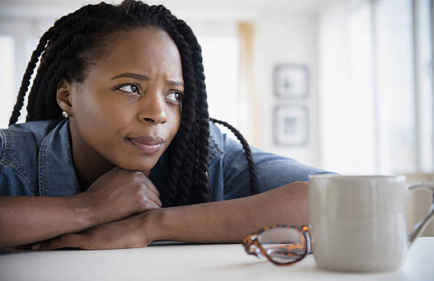
This year especially, it feels like the world is moving faster than anyone can keep up with. Technology is changing, politics are loud, and every time you open your phone, there’s another headline that makes your stomach drop. And while everyone feels that pressure, being Black means you’re also navigating the subtle and not‑so‑subtle reminders that your safety, your voice, and your peace aren’t guaranteed. That alone can make your nervous system feel like it’s running a marathon.
I’ve noticed that a lot of us carry anxiety in silence because we were raised to push through. We come from families that survived things far heavier than panic attacks, so we tell ourselves we should be able to handle it. But survival mode isn’t the same as peace. And pretending you’re not anxious doesn’t make the anxiety disappear, it just makes it louder when it finally breaks through.
What’s helped me is admitting that anxiety doesn’t make me weak. It makes me human. And honestly, it makes sense. When you grow up hearing stories about what could happen if you’re in the wrong place at the wrong time, or if you speak too boldly, or if you don’t speak at all, your body learns to stay alert. Even when you’re safe, your mind doesn’t always believe it. That’s not paranoia. That’s conditioning.
In 2026, therapy is more normalized in our community than it used to be, but there’s still hesitation. Some of us don’t trust the system feeling that what we share will be weaponized in some way. Some don’t want to open up to a stranger. Some don’t want to revisit things they’ve spent years trying to bury. I get that. But I’ve learned that talking to someone who understands—whether it’s a therapist, a friend, or even a journal—can feel like finally loosening a knot you didn’t realize had been there for years.
I’ve also had to learn that rest is not a reward. It’s a requirement. Black people are often expected to be strong, productive, unbothered, and endlessly resilient. But resilience without rest turns into exhaustion. And exhaustion turns into anxiety. So I’ve been practicing small things: stepping outside for air, putting my phone down when the news gets too heavy, letting myself say no without guilt, and reminding myself that I don’t have to earn calm.
Another thing that helps is community. There’s something healing about being around other Black people who just get it without you having to explain. The laughter hits different. The silence hits different. The understanding hits different. Sometimes managing anxiety isn’t about fixing anything, it’s about not feeling alone in it.
And honestly, joy is medicine too. Not the forced kind, not the “smile through the pain” kind, but the real moments that remind you your life is bigger than your stress. Cooking a meal you love. Listening to music that makes your shoulders drop. Watching something silly. Dancing in your living room. Letting yourself feel good without apologizing for it.
Being Black and anxious in 2026 is complicated, but it’s not hopeless. We’re learning to name what we feel, to ask for help, to rest without shame, and to build spaces where our nervous systems can finally unclench. We deserve that. We always have. And maybe that’s the quiet revolution happening right now—not just surviving but learning how to breathe again.
Staff Writer; Christian Starr
May connect with this sister over at Facebook; https://www.facebook.com/christian.pierre.9809 and also Twitter; http://twitter.com/MrzZeta.